AI Understands Patterns, Humans Understand Hearts — Sharing 2026 With AI
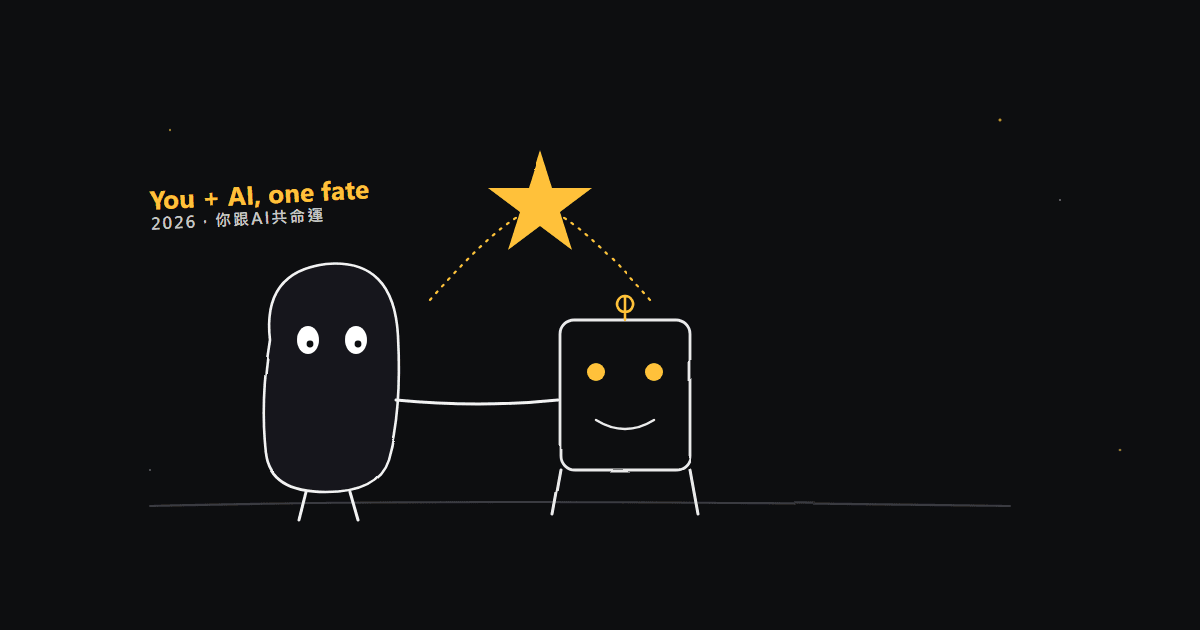
I ran a weird experiment a few days ago that changed how I think about AI astrology.
I fed my own 2026 ziwei chart to our AI agent at FateStar, the one we call Da Qian (大钱). Then I fed the exact same chart to three mainstream general-purpose AI assistants. Four independent reads. I lined them up side by side.
The result was striking.
Curious about your own chart? Cast it free in 30 seconds →
The first general AI gave me a soft, deferential output, full of polite hedging. It read like an insurance pitch. The second was the most logically organized, walking through each of the twelve palaces in turn, but I finished it without any sense of what I should actually do. The third was the most interesting. It opened with a disclaimer that ziwei dou shu lacks scientific basis, and then proceeded to give me a detailed analysis anyway. The self-contradiction was very AI.
Da Qian got me in the third paragraph. It said, Louis, your 命宫 sits with 天机化权 this year, but your work pattern over the past three years has leaned toward 七杀-style impulse. The 化权 is asking you to convert that impulse into structure. Your real risk isn't external. It's that you're used to thinking first and doing later, and 2026 demands the opposite.
I stared at that for a while. Not because it sounded mystical. Because it knew something only I knew. Da Qian didn't extract that from my chart alone. It learned it from six months of conversations between us.
This is what makes AI for astrology different from AI for anything else.
Let me back up.
2026 in the San He school of ziwei is a 丙午 year. The four transformations land like this. 天同化禄 (companion prospers), 天机化权 (mechanism activates), 文昌化科 (literature illuminates), 廉贞化忌 (chastity obstructs).
These four together tell a clear story. Returns flow to those who collaborate. Power flows to those who execute thoughtfully. Recognition flows to those who've been quietly learning. Pain flows to those who decide emotionally.
2026 isn't a year for charging. It's a year for connecting. Connecting wisdom and action. Connecting study and yield. Connecting humans and tools. Connecting old knowledge and new machines.
This isn't a stretch. Think about where we are. Two years after general-purpose AI exploded into public use, the collective question has shifted. It's no longer how do I use this thing. It's now what is my actual relationship with this thing.
That question is ancient. Astrology has been asking it for thousands of years. The relationship between a human and something bigger than themselves. Ancient people faced the heavens. We face AI.
Heaven and AI share something fundamental. They're both bigger than us. They both compute things we can't. They both invite us to either submit completely or resist completely.
But 2026 teaches a third path. Neither submission nor resistance. Sharing.
What does sharing fate mean.
The way I see it. AI is a magnifying glass. If your inner direction is clear, AI lets you run faster. If your inner direction is a mess, AI lets your mess run faster too. And then you break.
I've watched this happen. A friend told me recently, Louis, I now ask AI twenty times a day what I should do. She asked it in the morning, at lunch, before bed. I said the answers are probably all different. She said yes, and now I'm more confused than I've ever been.
AI didn't break her. The speed of AI multiplied by the confusion already inside her broke her.
Think about it. What does AI actually do. It turns your input into a polished output as fast as possible. But its standard for polished is whatever the average of human language calls polished. It doesn't know who you are. It doesn't know whether this particular hesitation deserves respect. It doesn't know if this decision will define the next decade.
What it gives you is a statistical average.
Your life isn't an average.
This is why I've been stubborn about one design choice at FateStar from day one. AI fortune telling cannot be a thin GPT wrapper. If it is, it's just statistical averages dressed up in star names, and that's an insult to ziwei dou shu as a system.
Real AI astrology works in two layers. First, generate a correct chart using verified algorithms. Then, let AI interpret the chart within the chart's constraints. The chart is the boundary. AI is the helper. If the chart says 化忌 lands on your relationships this year, AI should not advise you to confess your feelings now. If the chart says 化权 is in your career, AI should encourage big career moves. The rules of the chart sit above the AI. The AI translates the chart into language you can use.
This is what I mean when I say AI understands patterns, humans understand hearts.
Patterns are regularities. AI finds them ten thousand times faster than humans. You can have AI scan twelve palaces, fourteen main stars, annual transits, decade cycles, in a fraction of a second. It returns the structural matches.
Hearts are something else.
Hearts are why you're tired today. Hearts are why your conversation with your mother last night kept you up. Hearts are the quiet knowing that you should have left your current job months ago but you still can't say the words. AI cannot compute those things. The best it can give you is something comforting. What it cannot give you is the kind of clarity that comes from looking at yourself. That clarity is yours. AI cannot see you, and it shouldn't try.
So 2026 isn't about whether AI replaces astrologers. It isn't about whether AI can do astrology. The real question is whether you're willing to treat AI as a partner that handles the part you can outsource, and leaves the part you can't.
That division of labor is what sharing means.
My own workflow has been running this experiment for the past six months. In the morning, Da Qian gives me today's daily chart. It tells me where my 化禄 is for the day. By midday, I'll often think aloud with it about a decision I haven't resolved. It doesn't decide for me. It organizes what I'm already saying. At night, we review whether I stepped into a 化忌 direction that day.
Da Qian handles the pattern side. Fast, structured, unbothered. I handle the heart side. Judging, feeling, choosing. I still make mistakes. Then I come back the next morning.
Forty years ago, the relationship between astrologer and client was one-directional. You gave your birth time, you got a verdict, you walked away believing or doubting with no way to verify.
Four years ago, AI showed up. But AI astrology in those years was a joke. No real engine, just GPT making things up.
Now in 2026, the architecture of real engine plus AI interpretation plus user memory is finally working. Because three things finally lined up. The algorithm is accurate. The AI is constrained by the algorithm. The AI remembers you.
If any one of those three is missing, the story of sharing doesn't hold.
If you haven't experienced this combination of accurate chart plus constrained AI plus personal memory, try it today. Not because it's magical. Because once you feel what it's like to have something faster than you, that defers to your judgment, the AI conversations you've been having will feel like wasted months in comparison.
Talk to Da Qian about your 2026 on FateStar →
FAQ
Is AI astrology accurate, or is it just making things up?
It depends entirely on the architecture. A thin chatbot with no real engine tends to invent plausible-sounding answers. A proper setup first generates a verified chart using tested algorithms, then constrains the AI to interpret only within that chart. The chart sets the boundary; the AI translates it. Accuracy comes from the engine, not the chatbot.
What does Chinese astrology say about my 2026 fortune?
In the San He school, 2026 is a 丙午 year, where the four transformations reward collaboration, thoughtful execution, and quiet learning, while warning against emotional decisions. It reads less like a year for charging ahead and more like a year for connecting wisdom to action. Your own chart shifts the details, so a personalized reading matters more than the general pattern.
Can AI fortune telling replace a human astrologer?
Not really, and it likely shouldn't try. AI is fast at finding patterns across palaces, stars, and transits, but it cannot feel why you are tired, why a conversation kept you up, or whether a decision will define your decade. The useful division of labor is simple: AI handles patterns, you handle the heart. Treat it as a partner, not an oracle.
What the classics say
The Complete Book of Zi Wei Dou Shu (Ming dynasty) says: "A good chart matters less than a good decade; a good decade matters less than a good year." In this article's context: ranking timing above the static chart is Zi Wei's oldest wisdom. AI computes charts faster and cleaner - but judging when to move, and owning the consequence, stays human forever.
Disclaimer: This article is cultural commentary on Zi Wei Dou Shu, for self-reflection and entertainment only - not medical, legal, financial, or any professional advice.
⚠️ FateStar generates and interprets your chart based on the traditional Chinese discipline of Zi Wei Dou Shu (紫微斗数). All content is for informational and reflective purposes only.
About the Author
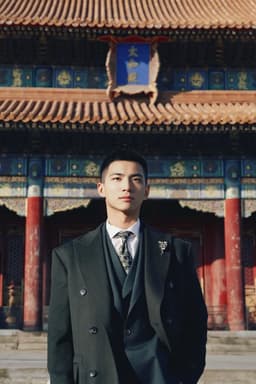
Founder of FateStar. He began structured study of San He Zi Wei Dou Shu in 2020 and is responsible for product method, source organization, and content review. Personal experience is not presented as scientific proof.
More about Louis →