Why Am I Always Mentally Exhausted? Your Fortune/Wellbeing Palace Holds the Answer
The Friend Who Was Still Replying to Messages at 3 AM
Last winter, my friend Jessica — the one who runs her own company — invited me to dinner. Her business was solid, she owned her apartment and her car, her marriage was steady. But sitting across from me that night, she stirred her noodles and said something I haven't forgotten since:
"Louis, I genuinely don't know what I'm even tired of. My days are fine. Then night comes and my brain just won't stop. Did I phrase that thing wrong today? Is that client annoyed at me? Nothing actually happened — I just feel unhappy."
I asked her: are you sleeping?
Curious about your own chart? Cast it free in 30 seconds →
She smiled, but it was the sad kind. "I lie down and it's like twenty browser tabs open at once. I can't close a single one."
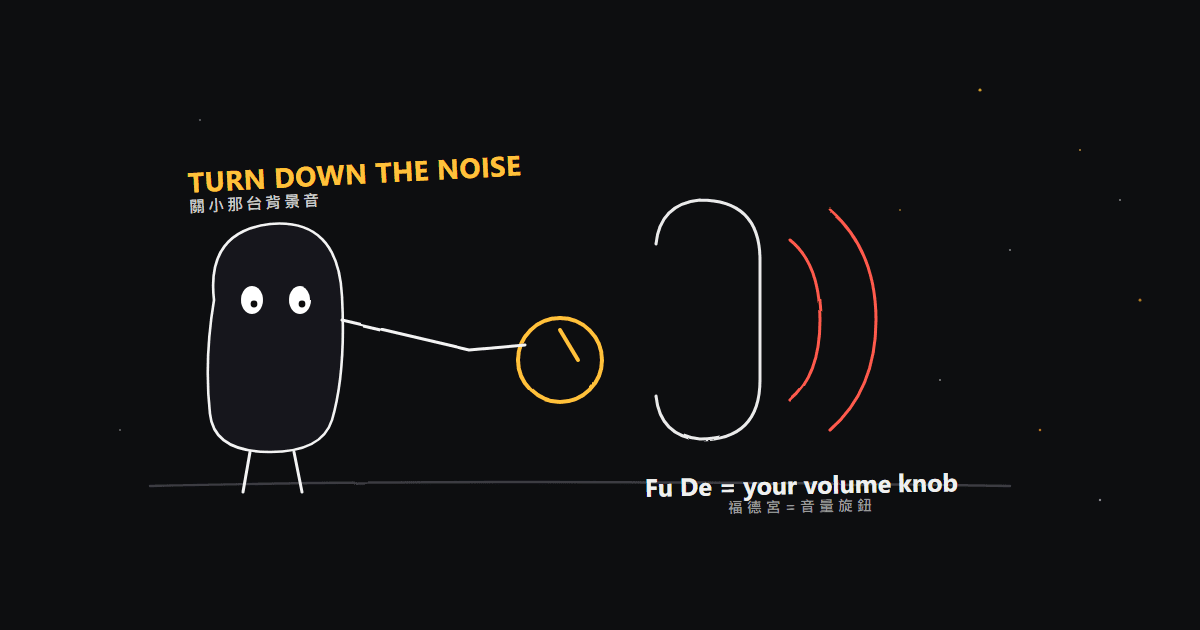
Right then I wanted to tell her: you're not being dramatic. You're not ungrateful. You just have a background speaker that never turns off — one nobody else can hear, but that plays for you through the night.
This feeling — nothing is actually wrong, but I'm still not okay — has a very specific home in Zi Wei Dou Shu (Purple Star Astrology). It's called the Fortune/Wellbeing Palace. Today I want to explain in plain terms where emotional exhaustion really comes from, and how to finally make peace with that speaker.
People who are mentally drained aren't lazy. They're fighting a war against an invisible opponent, around the clock. And that opponent is almost always themselves.
The Fortune/Wellbeing Palace Is Not About "How Lucky You Are" — It's Your Brain's Default Weather
When most people hear "Fortune/Wellbeing Palace," they assume it's about whether you'll live an easy, blessed life. That's a huge misunderstanding.
Let me give you the clearest analogy I know.
Think about your phone's default settings. Same model, same hardware — but one phone ships in battery-saver mode: screen dim, notifications off, everything quiet. Another ships with performance mode on full blast: screen blazing, every alert coming through, nothing filtered. Same device, completely different out-of-the-box experience.
The Fortune/Wellbeing Palace is your mental world's factory default.
- Some people default to clear skies — they feel okay for no particular reason, and a small piece of good news can lift them for hours.
- Some people default to overcast with a light drizzle — even when nothing has gone wrong, there's a faint, low-level unease underneath everything. A vague restlessness. A sense that something is off, though they can't name it.
The key word is default. Good days and bad days are the weather events — a sudden storm, a burst of sun. But the Fortune/Wellbeing Palace governs what your mind automatically plays when the external world goes quiet.
That's why you ask: why am I always anxious? Because even on a dry afternoon, you feel damp. Your default setting carries humidity.
The Fortune/Wellbeing Palace doesn't determine what happens to you. It determines what your mind is doing when nothing is happening.
Once you understand this, Jessica's situation makes complete sense. She was fine during the day because daytime kept her attention occupied. Once evening came, the default kicked in. The background speaker switched on. Her exhaustion wasn't caused by any single event — it was her baseline surfacing the moment there was nothing to cover it.
The Overthinker's Palace: High-RPM Stars Running in the Background
Zi Wei Dou Shu describes the inner life through fourteen major stars. The one sitting in your Fortune/Wellbeing Palace is essentially the default channel your background speaker is tuned to.
I won't bury you in jargon. Here are the three types I see most often in people who come to me exhausted — described in human terms:
Type One: The Perpetual-Motion Mind. When certain analytical, pattern-seeking stars occupy the Fortune/Wellbeing Palace, the brain simply doesn't idle. The upside is real — sharp thinking, long-horizon planning, creative leaps. The cost is that a single throwaway comment from someone can play on a mental loop for days, expanding into an entire imagined narrative. This is textbook overthinking. It's not a character flaw. It's a high-RPM engine that doesn't have a neutral gear. Telling it to stop is like pulling the plug on a fan and expecting the blades to freeze instantly — it takes a while to wind down, and the tendency never fully goes away.
Type Two: The Self-Imposed Perfectionist. Some palace configurations lean toward precision, standards, and a finely tuned sense of right and wrong. These people suffer from emotional exhaustion because they carry an extremely high internal measuring rod — and they use it on themselves constantly. They complete something at 90% and, while everyone around them is impressed, they lie awake staring at the missing 10%. Jessica recognized herself here immediately. The client hadn't said a word. She'd already tried herself in her own internal courtroom.
Type Three: The Person Who Absorbs Everything. Certain palace patterns tend soft and emotionally receptive. These people make extraordinary friends and partners — they catch what others feel, they read a room without needing it spelled out. But the cost is that nothing bounces off. A brief expression, an ambiguous tone, a message that took a second too long to arrive — it all lands and stays. After years of this, "life feels exhausting" isn't an exaggeration.
Notice something? None of these are character flaws.
Intelligence. Conscientiousness. Empathy. Every one of those is genuinely valuable. The truth about mental exhaustion is this: your best qualities are running at full power, and there's no off switch. The high-RPM mind meant to cover long distances ends up burning fuel in place. The high standards meant to produce excellent work turn into a perpetual self-audit. The empathy meant to warm others drowns you first.
Your exhaustion is your gifts running past their limits. The capacity for deep inner life and the tendency toward mental drain are two faces of the same star.
One honest note on astrology here: what actually shapes your Fortune/Wellbeing Palace's character is the major star holding that position. You may encounter readings that make a great deal of minor stars — certain smaller indicators associated with isolation or chronic worry — and use them to paint grim pictures. Don't take that bait. Minor stars carry very little weight on their own. Reading someone's mental baseline from small peripheral stars while ignoring the major star in residence is like diagnosing someone's health from their shoelace color. Always look at what's actually sitting in the palace.
The Hua Ji Factor: Who Turned Your Emotional Volume Up?
One more piece, and then the picture is complete. I'll keep this light.
Zi Wei Dou Shu includes a system called the Four Transformations, which I find easiest to think of as four volume dials, each governing a different emotional frequency: smooth flow (禄/lu), drive and control (权/quan), recognition and dignity (科/ke), and the one most relevant here — transformation into adversity (hua ji / 化忌).
Hua ji is not a curse. Here's my favorite analogy for it: hua ji is like having a particular spot in your chest that's just a little more tender than the rest. You can go about your day fine — until something grazes that spot. Then it's disproportionately present, and you keep finding your fingers returning to it even when you know you shouldn't.
When hua ji falls in the Fortune/Wellbeing Palace, that emotional dial is set a few notches higher than average from the start. The same minor incident that someone else processes and forgets in thirty seconds can orbit your mind for three days. This is one of the most common astrological signatures I see in people describing mental exhaustion — not because something is broken, but because a particular dial shipped high.
A quick note on precision here, because this matters: in properly-calibrated Zi Wei Dou Shu, the Four Transformations are assigned by birth year according to established school lineages. For those born in a geng (庚) year, the sanhe school — the system our chart engine is locked to — assigns hua ji to the star Tai Yin. This isn't arbitrary; it's been consistent across generations. I mention it so you know: legitimate Purple Star Astrology is a traceable, rule-based system, not something a reader improvises.
Transformation into adversity (hua ji) isn't a punishment. It's a list of things you care about more than most people do. Understand it, and you'll know exactly where your energy goes when it drains.
The dial being high doesn't mean it's stuck there forever. But adjusting it isn't about changing fate — it's about changing how you relate to the dial.
Three Concrete Ways to Make Peace with Your Fortune/Wellbeing Palace
After five years and more than three hundred charts, the thing I believe most firmly is this: once you understand why you're mentally exhausted, half of the exhaustion dissolves on its own. The other half comes apart through three practices.
One: Give the background speaker a label.
The next time you catch yourself overthinking, or feel that familiar low-grade unease settle in for no apparent reason, resist the urge to scold yourself for "doing it again." Try saying instead: "Oh — that's my Fortune/Wellbeing Palace star spinning up. Not a sign that something's gone wrong. Just my default weather."
This sounds almost too simple, but it's a technique with solid grounding in psychology — emotional labeling. The moment you can name what's happening, you shift from being submerged in it to standing slightly apart from it. That distance is everything. The Fortune/Wellbeing Palace is most useful not as a prediction but as a mirror: I'm not broken. This is my factory setting.
Two: Redirect the energy outward.
We established that mental drain is often strong qualities aimed entirely inward. The solution is to give them somewhere to go.
- If you're a high-RPM thinker: stop letting the engine idle. Feed it a real problem. Write things down. Make a plan. Work through something concrete. A mind with genuine work to do doesn't loop.
- If you're a high-standards person: point the measuring rod at something outside yourself — a craft, a project, the quality of help you give someone. Let precision produce value rather than produce self-reproach.
- If you absorb others' emotions: keep being the person who actually makes people feel heard. But build a perimeter. Fill your own glass before you pour.
This is what it actually means to convert mental drain into genuine wellbeing: same star, same energy, different direction. Turned inward it's a grindstone. Turned outward it's an engine.
Three: Accept your default weather. Stop trying to become someone with different firmware.
This is the hardest one, and the most freeing.
For people who default to overcast, the deepest exhaustion often isn't the anxiety itself — it's the secondary layer of why can't I just be naturally cheerful like some people are? But forcing a power-saving phone to run at maximum performance doesn't make it stronger. It just drains the battery faster.
Your Fortune/Wellbeing Palace gives you a texture. Inside that texture lives your sensitivity, your depth, your seriousness about things that matter. A remarkable number of creators, thinkers, and quietly powerful people don't default to bright sunshine. Making peace doesn't mean converting overcast into clear skies. It means learning to live well in overcast weather — and eventually noticing that overcast has its own kind of beautiful.
You don't need to become someone who is happy all the time. You just need to become someone who understands what their own background speaker is playing.
What This Piece Is Really Saying
Mental exhaustion almost never comes from not being good enough. More often, it comes from being too perceptive, too responsible, too invested in getting things right. The Fortune/Wellbeing Palace isn't there to judge you. It's there to tell you: here's the song your background speaker defaults to — and that song is also your most valuable gift.
After that dinner, Jessica didn't transform into someone carefree. But she told me later that once she started thinking of it as "my star spinning up" rather than "me breaking down again," those 3 AM mental committee meetings got shorter. That's enough.
If you're curious what channel your own Fortune/Wellbeing Palace defaults to, or where your emotional volume dial is set, you can pull up a free Zi Wei Dou Shu chart at fatestar.top and use it as a mirror for understanding yourself better. More articles like this one live at /blog.
I hope you and your background speaker find your way to a truce.
What the classics say
The Complete Book of Zi Wei Dou Shu (Ming dynasty) says: "The Fortune palace reveals the depth of one's blessing." In this article's context: the classics read this palace for the "thickness of blessing" - in modern terms, your baseline mental noise level. Inner friction is not being dramatic; it is this palace's structure making sound, and only a seen noise can be turned down.
FAQ
Bad Fortune palace = doomed to unhappiness?
No. It describes your default mental baseline - factory volume settings. Louder settings need deliberate quiet-building habits; that's maintenance, not doom.
Inner friction: read Fortune or Health palace?
Fortune first (mental source), Health second (bodily symptom): insomnia and stress-eating are often Fortune-palace noise conducted into Health.
How to actually use it?
Find your recharge mode from the palace's star nature: Tian Tong types need true rest, Tian Ji types recharge by thinking, Wu Qu types discharge through exercise - recharge by your own star, not someone else's routine.
Disclaimer: Zi Wei Dou Shu (Purple Star Astrology) describes tendencies and patterns — it is a lens for self-understanding and decision-making, not a guarantee of any outcome, and it is not a substitute for professional medical, psychological, legal, or financial advice. If emotional distress is affecting your daily life, please reach out to a qualified mental health professional.
⚠️ FateStar generates and interprets your chart based on the traditional Chinese discipline of Zi Wei Dou Shu (紫微斗数). All content is for informational and reflective purposes only.
About the Author

Founder of FateStar. He began structured study of San He Zi Wei Dou Shu in 2020 and is responsible for product method, source organization, and content review. Personal experience is not presented as scientific proof.
More about Louis →