Your Children Palace in Zi Wei Dou Shu: Not a Fertility Test — a Map of How You Parent
The Night Jessica Asked Me, "Am I Just Not Meant to Be a Mom?"
Last winter, my friend Jessica — she works in finance — asked to meet at a café. She'd been married four years, just turned thirty-four, trying to conceive for over a year with nothing to show for it. Her in-laws never said a word, but their eyes said everything. That evening she stirred her cold coffee in slow circles, then looked up at me and asked: "Louis, you've read my chart before. My Children Palace… does it mean I'm just not meant to have kids? That I was never supposed to be a mother?"
I didn't rush to open the chart. Instead I asked her one question: "Are you trying to find out whether you can have children — or are you trying to understand what kind of mother you'd be?"
She went quiet for a few seconds. Then her eyes went red.
Curious about your own chart? Cast it free in 30 seconds →
She wasn't really asking about fertility. She was asking something far more personal: Am I the kind of person who can raise a child well?
That's exactly why I'm writing this.
Over five years of reading charts, I've sat with hundreds of people in front of their Zi Wei Dou Shu (Purple Star Astrology) charts. And I'd say eight out of ten people who ask about their Children Palace open with the same question: "Can I have kids?"
Here's the honest truth: Zi Wei Dou Shu's Children Palace was never a pregnancy test. Whether you conceive, when it happens, how many children — those are questions for your body, your doctor, and a good measure of timing and circumstance. Astrology cannot answer them, and it shouldn't pretend to.
What the Children Palace actually reveals is your pattern of connection with children — how you parent, what rhythm feels natural to you, and when that bond tends to be most alive.
This article is that conversation. No fertility predictions. No manufactured anxiety. Just a plain-language look at what the Children Palace truly shows — and what it means for how you relate to the next generation.
First, Let's Decode "Children Palace" Into Plain English
Zi Wei Dou Shu maps a person's life across twelve palaces — twelve sectors, each governing a different domain. The Wealth Palace covers money. The Career Palace covers work. The Relationship Palace covers partners. And the Children Palace governs your relationship with the next generation: children, younger people you mentor, things you nurture and grow from scratch.
Notice I said relationship, not reproduction. This is the single most misunderstood thing about this palace:
The Children Palace shows the quality and texture of your bond with children — whether it feels close or distant, easy or challenging, early-blooming or slow to develop. It does not forecast whether you will have children, or how many.
Think of it like a care manual written specifically for you. The manual tells you: here's how this machine works best, what temperature it needs, what happens when you push it too hard. But it says nothing about whether you'll ever own the machine. That's a question for the store — meaning medicine, biology, and life's timing.
So take a breath and let this land: this entire article does not touch the question of whether you'll have children. We're reading the manual, not deciding if you get the machine.
One more important note: in Zi Wei Dou Shu, "children" is a broader concept than it first appears. Even for people without biological children, this palace remains highly meaningful. Its energy flows toward the people and things you pour yourself into — students you mentor, a team you build, a creative project you raise from an idea to something real, a younger sibling you help along the way. The Children Palace is really about how you nurture what you care for. Children are the most vivid example, but far from the only one.
Reading Your Children Palace Main Star: Four Natural Parenting Rhythms
The Children Palace main star — whichever of the fourteen primary stars of Zi Wei Dou Shu occupies this palace — tells you something specific: the default rhythm that emerges naturally when you're in a caregiving role. Here are the four broad patterns I see most often, translated out of astrology-speak:
Pattern One: The Architect Parent (stars like Zi Wei, Tian Fu, Tai Yang)
You instinctively want to build structure, lay the groundwork, carry the weight. You'd plan a child's next thirty years if you could. The gift: children raised by Architect Parents have a strong sense of direction and feel deeply protected. The challenge: you can over-manage, set expectations so high that the child can't breathe. Your real work here is learning how to step back — to trust that a child who can stumble a little will grow stronger for it.
Pattern Two: The Friend Parent (stars like Tian Ji, Tian Tong, Tai Yin)
You're tuned in, emotionally present, and genuinely willing to get down to a child's level. Kids open up to you. They tell you things they'd never tell someone more authoritative. The gift: warmth and closeness that children carry into adulthood. The challenge: you sometimes struggle to hold a firm line. Rules that need to exist don't always get enforced. Your real work is learning that gentle and firm can coexist — love doesn't require you to say yes to everything.
Pattern Three: The Adventure Parent (stars like Lian Zhen, Tan Lang, Po Jun)
You bring energy, unpredictability, and imagination. A child growing up around you never gets bored — you're creative, spontaneous, and you open doors to the world they wouldn't have found alone. The gift: a wildly expanded sense of what's possible. The challenge: your intensity has a flip side. Your pace can be fast, your moods can swing, and a child may sometimes feel electrified by your presence and invisible in the same week. Your real work is consistent presence — showing up in ways the child can count on, not just on exciting days.
Pattern Four: The Provider Parent (stars like Wu Qu, Qi Sha)
You don't say "I love you" easily. But you show up, every single time — you make the hard calls, carry the financial weight, make sure everything that needs to be in place is in place. The gift: a child who grows up with security and eventually, in adulthood, understands just how much you were doing. The challenge: the child often won't understand until much later, because what looked like emotional distance was actually quiet dedication. Your real work is finding ways to say the love out loud — even imperfectly, even awkwardly — so the child doesn't spend years wondering.
I need to say this clearly, before you go looking for your palace and trying to slot yourself into one of these:
These patterns are tendencies, not verdicts. The stars paint the base color of your temperament. What you do with that color — how you blend it, deepen it, or consciously change it — that's entirely in your hands.
There's also an iron rule I apply to every reading: minor stars carry very little weight in isolation. I've met people who were told by someone that a minor star in their Children Palace meant they had "no affinity with children" — and lost sleep over it for months. That's astrology done badly. A minor star that accounts for maybe five percent of a palace's energy should never be elevated into the headline conclusion. The main stars and their overall configuration are what set the tone. Anyone who reads your Children Palace from a single minor star isn't reading your chart — they're frightening you.
What Does "Later Timing" Actually Mean?
The phrase that worries people most: having children later in life.
Yes, certain configurations in Zi Wei Dou Shu do suggest that the bond with children tends to activate later — maybe because someone genuinely doesn't want children young, maybe because early life is absorbed by building a career, maybe simply because their temperament is the "get ready first, then show up fully" type.
But I want you to hear "later timing" not as a warning, but as a rhythm:
"Later" doesn't mean "not possible." It means the clock of this particular connection runs a little slower than average. People whose clocks run slow often arrive better prepared, with more steadiness than those who rushed.
When I looked at Jessica's chart, I told her: this is a configuration where the bond tends to develop more deeply over time, and where forcing the timeline tends to work against you. What I said was not "you'll have children late." What I said was: "The more tense and urgent you make this, the more you work against your own grain. Your pattern is water-finding-its-level, not sprint-to-the-finish. The most useful thing you can do right now is settle into yourself, tend to your relationship with your husband, and let the conditions develop rather than trying to manufacture them."
As for when the energy around children tends to feel most alive — that's something Zi Wei Dou Shu looks at through major periods and annual cycles: essentially, which years the overall energy and emotional landscape seem most naturally aligned. But I'm careful about how I say this: it's a probability gradient, not a circled date. The chart shows you which terrain is easier to walk through — not where the destination sits. That distinction took me five years of readings to really internalize, and it's the one I'm most careful to pass on.
So — Is There an Answer to "Am I Cut Out to Be a Parent?"
Back to Jessica's most painful question: Am I meant to be a mother?
My answer probably isn't what you'd expect. Zi Wei Dou Shu cannot tell you whether you're suited to be a parent. But it can tell you what kind of parent you naturally are. One word's difference, and a world of meaning between them.
"Suited or not suited" carries a pass/fail flavoring — and that flavor is exactly what generates anxiety. But in five years of reading, I have never once opened a chart and seen "this person is not qualified to be a parent." That configuration doesn't exist.
There are no people who are unfit to be parents. There are only people who haven't yet found the parenting style that fits who they are.
What Zi Wei Dou Shu can do is lay your default settings out on the table: where your patience tends to run thin, what situations most often cause you to lose your cool with children, what you naturally give with ease, and what you tend to withhold without realizing it. When you see those things clearly, you can work with them — build on what's already there, and consciously compensate for what isn't. That's the one genuinely useful thing astrology offers in this space: a mirror that shows you yourself more clearly, so you can walk toward the child in your life with more self-awareness and less guesswork.
When I finished talking, Jessica let out a long breath. She said: "So it's not that I'm unqualified. I've been trying so hard to be a perfect mother that I've been destroying myself in the attempt." What she needed in that moment wasn't a fertility forecast. It was someone saying: you're not broken, you're just pushing in the wrong direction.
One Thing I Want to Leave You With
If you've ever stared at your Children Palace and asked "am I destined to be disconnected from children?" or "am I really cut out for this?" — here's the thing I most want you to hear:
The Children Palace was never built to frighten you about whether you'll have children. It was built to show you what kind of parent you already have the potential to be. Every parenting clock runs at its own pace. Not one of them is wrong.
Don't let a chart become the source of your anxiety. It should be the thing that helps you understand yourself more clearly, so that when children do enter your life — in whatever form — you meet them with more steadiness and less fear.
If you'd like to see which main star sits in your own Children Palace, and get a sense of your natural parenting rhythm, you can pull up a free chart at fatestar.top. Take your time with it. There's no rush.
What the classics say
The Complete Book of Zi Wei Dou Shu (Ming dynasty) says: "The Children palace reveals one's offspring." In this article's context: the original text asks about offspring, but modern reading has long shifted to the bond pattern: how you and your children mesh, and which parenting posture fits you - the genuinely useful part of this palace today.
FAQ
Weak Children palace = shouldn't have kids?
No. The palace describes interaction patterns and parenting blind spots; the decision itself is a medical and family matter - the chart is one reference lens.
What else does it cover?
Traditionally also younger-generation bonds and creative output (works count as "children") - useful even with no parenting plans.
How to improve the parent-child bond with it?
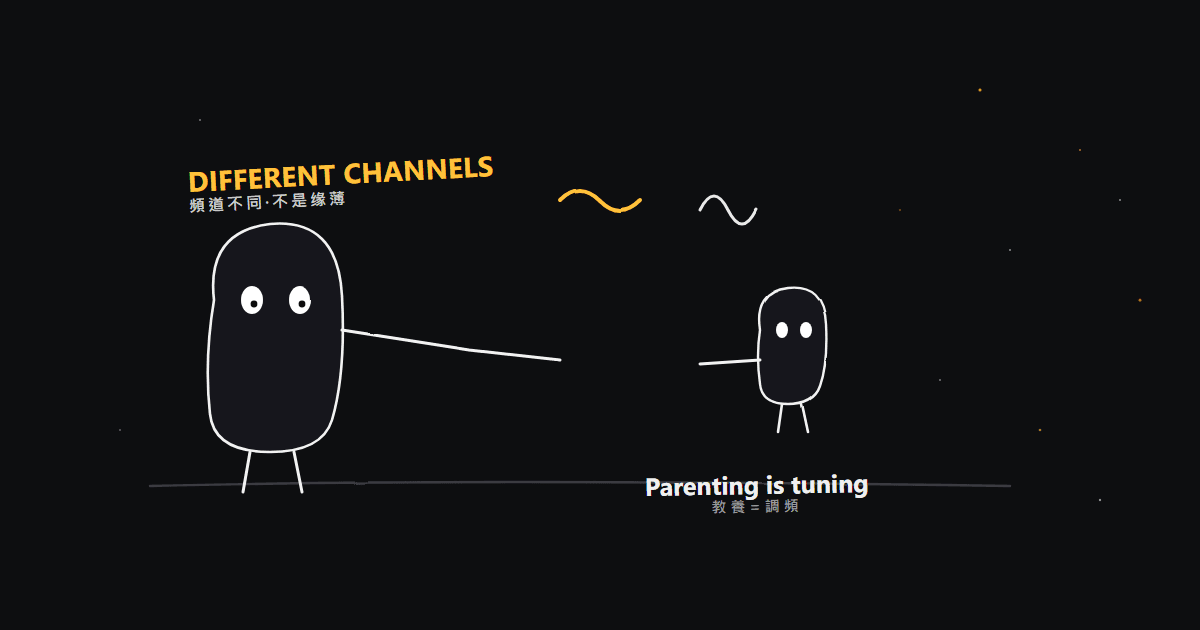
Use the star natures to see the "channel gap": a Wu Qu parent with a Tian Tong child needs to deliberately soften the tempo.
Disclaimer: Fertility and conception are medical matters — please consult a qualified healthcare professional for any concerns about pregnancy or reproductive health. This article discusses Zi Wei Dou Shu's Children Palace as a lens for self-understanding only, and does not constitute medical, legal, or financial advice. Astrology reflects tendencies and patterns, not fixed fate — you remain the author of your own life.
⚠️ FateStar generates and interprets your chart based on the traditional Chinese discipline of Zi Wei Dou Shu (紫微斗数). All content is for informational and reflective purposes only.
About the Author
Founder of FateStar. He began structured study of San He Zi Wei Dou Shu in 2020 and is responsible for product method, source organization, and content review. Personal experience is not presented as scientific proof.
More about Louis →