Compatibility Chart Myths: Couple Readings Show How You Work - Not Whether You "Match"
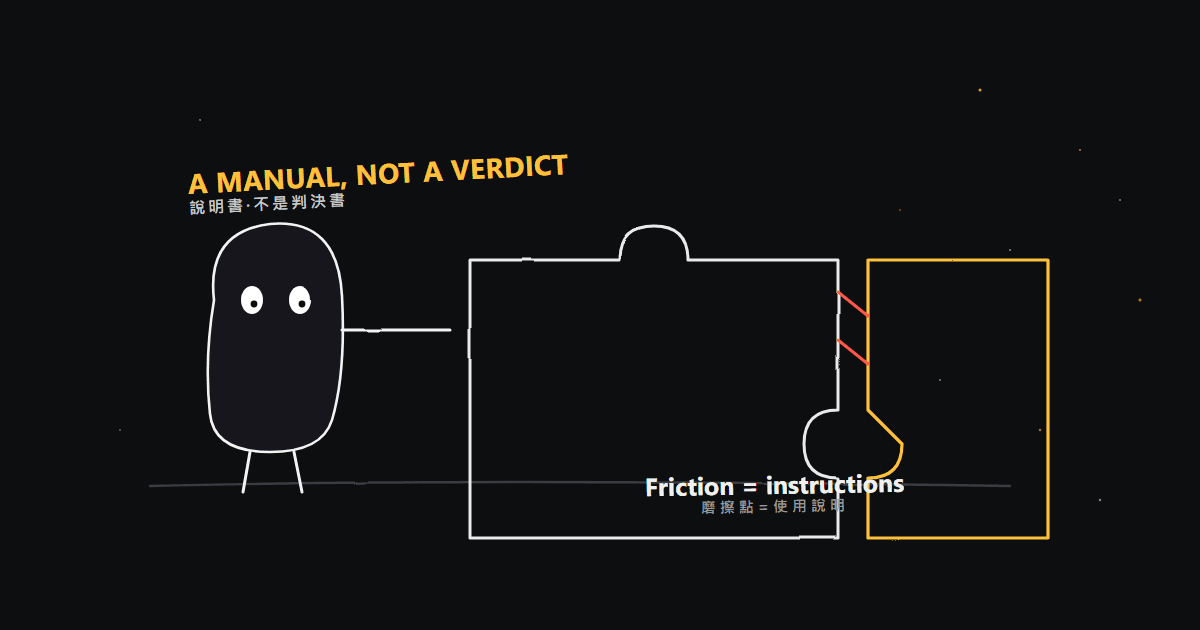
"Master, are we compatible?" - the most common opening line in couple readings, and the wrong question.
It assumes the reading works like a pregnancy test: two lines yes, one line no. That's not how Zi Wei couple charts operate at all.
Myth 1: The reading judges "compatible or not"
Reality: it reads three interaction layers -
Curious about your own chart? Cast it free in 30 seconds →
- Attraction: why you pull toward each other (star complementarity and resonance)
- Friction: where your mode gaps will spark (clashing transformations, mismatched needs)
- Cohabitation: long-run daily life - who leads, how labor splits, how fights end
Every couple's chart has all three. No pairing scores 100%, none scores 0% - there is only "here is what this pairing's coursework looks like."
Myth 2: Many friction points = break up
Reality: friction points are a user manual, not a return slip.
I've seen high-friction pairs thrive - they knew the landmines and walked around them - and "perfect match" pairs dissolve from sheer complacency. The Complete Book analyzes pairings as configurations and interactions; "incompatible, therefore discard" appears nowhere in the classics. That logic is modern fast-food fatalism.
Relationship quality is decided by how two people handle their gaps, never by the gap count itself.
Myth 3: One reading settles it forever
Reality: charts are static; people aren't.
A natal chart describes default modes - but a controlling 25-year-old is often a mellowed 35-year-old. A couple reading's correct tense is present continuous: it describes your current mode interaction, not a sealed ending.
The three healthy uses
- Translator: turn "you never understand me" into "my Tian Tong needs caretaking; your Wu Qu expresses love by solving problems." Needs that can be spoken can be negotiated.
- Minefield map: know the friction zones (money style, space needs) before the fight, and set rules early.
- Periodic check-in: as decade and annual cycles shift, the relationship's theme shifts - seasonal wardrobe changes go smoother when you see the season turning.
Pre-marriage reading? Fine - in these three modes. Not as a certificate ceremony. Companion piece: how couple charts work.
FAQ
Q: The reading says we "clash" - now what? "Clash" is the most abused word in the trade. Demand specifics: which star, which palace, what interaction? Unpacked, it usually deflates to "different modes" - with concrete handling strategies. A reader who only offers the word "clash" and no structure isn't offering a reading.
Q: Only one of us has a reliable birth hour - possible? Half-reading: your chart maps your side of the dynamic. For the other side, lived observation beats a wrong chart.
Q: When should couples do a reading? After stability, before major commitments (moving in, marriage), or when communication jams and you need a new shared language. Situationship-stage readings are usually anxiety looking for an exit.
Disclaimer: This article is cultural commentary on Zi Wei Dou Shu, for self-reflection and entertainment only - not professional advice of any kind.
Cast a free chart at FateStar - no login required.
Classical references: Complete Book of Zi Wei Dou Shu (Ming dynasty); Tai Wei Fu.
⚠️ FateStar generates and interprets your chart based on the traditional Chinese discipline of Zi Wei Dou Shu (紫微斗数). All content is for informational and reflective purposes only.
About the Author

Founder of FateStar. He began structured study of San He Zi Wei Dou Shu in 2020 and is responsible for product method, source organization, and content review. Personal experience is not presented as scientific proof.
More about Louis →