Author: Louis | Founder of FateStar
Once Minor Heat (小暑, Xiao Shu) arrives, summer has properly settled in. The older generation has a saying: "Minor Heat, Major Heat, steamed from below and boiled from above." The muggiest stretch of the year is starting.
Around this solar term, I also get the same question over and over in my inbox: "I've already looked at my reading for the year, but what about this month? Will next month be any better?"
Curious about your own chart? Cast it free in 30 seconds →
What people are really asking about is a specific thing in Zi Wei Dou Shu: the monthly cycle, Liu Yue (流月). This post explains it clearly: what Liu Yue is, how it relates to your yearly reading, and how ordinary people can use it. Nothing mystical. Just treat it as a map for the current month.
1. First, get this straight: the ten-year period, the annual cycle and the monthly cycle are three different "lenses"
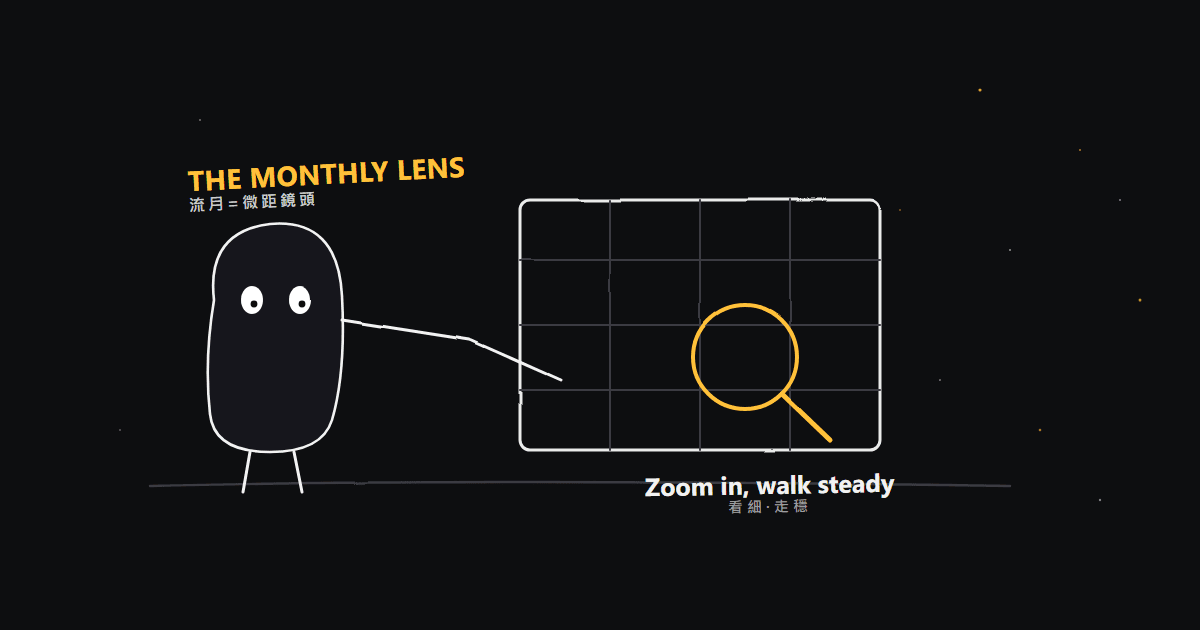
A lot of people get lost in the terminology right away. Broken down, it's simple. These are three lenses at different magnifications, all pointed at the same birth chart:
- Da Xian (大限, the ten-year period): one step every ten years, a wide-angle lens. It shows the overall direction of the decade.
- Liu Nian (流年, the annual cycle): changes once a year, a standard lens. It shows the overall ups and downs of the year.
- Liu Yue (流月, the monthly cycle): changes once a month, a macro lens. It shows the specific rhythm of the month.
The higher the magnification, the finer the detail, but also the narrower the view. So here's a piece of common sense not to get backwards: however good a Liu Yue is, it can't overturn the bigger picture of the Liu Nian; and however strong a Liu Nian is, it can still be tripped up by a rough Liu Yue. They nest inside each other. They don't each tell their own separate story.
The Complete Book of Zi Wei Dou Shu (紫微斗数全书) puts it bluntly: "Periods carry weight, and fortunes rise and fall." The period (the big direction) sets the tone, and the fortune (the flow) shows the present moment. You need to read both together; looking at only one layer makes it easy to misjudge.
2. How is Liu Yue worked out?
I'm explaining the principle here. You don't have to calculate it yourself (a tool will do that), but knowing the logic means you won't get fooled.
The starting point of Liu Yue is whichever palace the first lunar month of the Liu Nian falls in. From there it moves forward one palace per month, so twelve months cover all twelve palaces exactly. Whichever palace it lands in, the star arrangement of that palace is the main scene you'll be dealing with that month.
Then add one more layer: each monthly palace brings out its own Four Transformations (四化, Si Hua): Hua Lu (化禄, transformation into prosperity), Hua Quan (化权, transformation into power), Hua Ke (化科, transformation into recognition) and Hua Ji (化忌, transformation into obstruction). The Four Transformations are the "mood markers" of Zi Wei Dou Shu:
- Hua Lu: things go smoothly, you gain something, money or opportunities come in
- Hua Quan: you can apply force, you have the lead, but you can also come on too strong
- Hua Ke: reputation, helpful people, paperwork goes smoothly
- Hua Ji: friction, getting stuck, the places to pay extra attention
FateStar uses the San He school (三合派) convention for the Four Transformations. For example, for the Bing (丙) heavenly stem: Tian Tong (天同, the Harmony star) transforms into Hua Lu, Tian Ji (天机, the Strategist star) into Hua Quan, Wen Chang (文昌, the Literary star) into Hua Ke, and Lian Zhen (廉贞, the Chastity star) into Hua Ji. This is the set handed down through generations of teachers. We lock the algorithm in and don't switch between systems, so the same chart doesn't give a different story just because someone swapped methods.
3. So how should ordinary people actually use Liu Yue?
All the theory is for this step. Liu Yue isn't for "predicting good or bad luck". It's for setting your pace. Here are three practical ways to use it:
See which palace is this month's "home field" If Liu Yue moves into the Wealth Palace (财帛宫), your mind will naturally be on money this month. If it moves into the Spouse Palace (夫妻宫), relationship matters will come to the surface. If it moves into the Career Palace (官禄宫), work is the main storyline. Once you know the home field, you won't push hard in the wrong place.
See where Hua Ji lands, and stay alert ahead of time Hua Ji doesn't mean "bad luck". It means "this is where things tend to get stuck". For example, if the monthly Hua Ji enters the Travel Palace (迁移宫), double-check your travel plans and outside communication this month, and don't rush. Knowing where it's slippery means walking a bit more slowly, not refusing to walk.
Use it as an anchor for a monthly review Spend ten minutes at the start of each month looking at which palace Liu Yue lands in and where its Four Transformations fall, and give yourself a small theme for the month. Then look back at it again at the end of the month. The chart is only a map. Whether you walk, and how you walk, is up to you.
4. Frequently asked questions (FAQ)
Q: Is Liu Yue accurate? How far can I trust it? A: Zi Wei Dou Shu is a "structural model". It's good at describing tendencies and rhythms, not at giving you definite answers like "on this date, this will happen". The healthiest way to use it is as a tool for self-awareness. It helps you put your attention in the right place, and the decision always stays with you.
Q: If Liu Yue and Liu Nian conflict, which one do I go by? A: The Liu Nian, which is the higher level, takes priority. A Liu Yue is one segment within a Liu Nian. A good Liu Yue can make a good year run more smoothly and give a bad year some breathing room, but it can't turn the whole picture around.
Q: Is a solar term like Minor Heat the same thing as Liu Yue? A: No. Solar terms are markers on the solar calendar, while Liu Yue is a fortune unit in Zi Wei Dou Shu laid out according to your chart. The two don't line up perfectly in time. A solar term works well as an everyday anchor to "remind yourself to shift gears", but Liu Yue is the monthly fortune in the astrological sense.
Closing thoughts
After Minor Heat, the year slides into its second half. Rather than worrying about "what will the rest of the year bring", try zooming the lens in a little: look at it one month at a time, and walk it one month at a time.
The macro map of Liu Yue doesn't give you answers. It gives you a sense of rhythm. People who move with rhythm often arrive more steadily than people who simply move fast.
Disclaimer: This article is an introduction to Zi Wei Dou Shu as a cultural tradition. It is for self-awareness and entertainment only and does not constitute decision-making, investment, medical or life advice. Your fate is in your own hands.
To see which palace your Liu Yue lands in this month and where its Four Transformations fall, you can cast your chart on FateStar without logging in.
Classical references: The Complete Book of Zi Wei Dou Shu (紫微斗数全书, compiled by Luo Hongxian, Ming dynasty) and the Tai Wei Fu (太微赋).
⚠️ FateStar generates and interprets your chart based on the traditional Chinese discipline of Zi Wei Dou Shu (紫微斗数). All content is for informational and reflective purposes only.
About the Author

Founder of FateStar. He began structured study of San He Zi Wei Dou Shu in 2020 and is responsible for product method, source organization, and content review. Personal experience is not presented as scientific proof.
More about Louis →Related Articles
How Do You Calculate the Five Element Bureau in Zi Wei Dou Shu?
Zi Wei Dou Shu vs BaZi vs Western Astrology: How They Differ
When Is the Right Time to Buy a House? Your Property Palace in Zi Wei Dou Shu
Born in a Leap Month: How Do You Set Up a Zi Wei Dou Shu Chart?
When Does My Wealth Luck Arrive This Year? Stop Waiting — Your Zi Wei Dou Shu Wealth Palace Shows You Which Door Is Open