2026 Annual Fortune Isn't a Prediction — It's Your Answer From Zi Wei
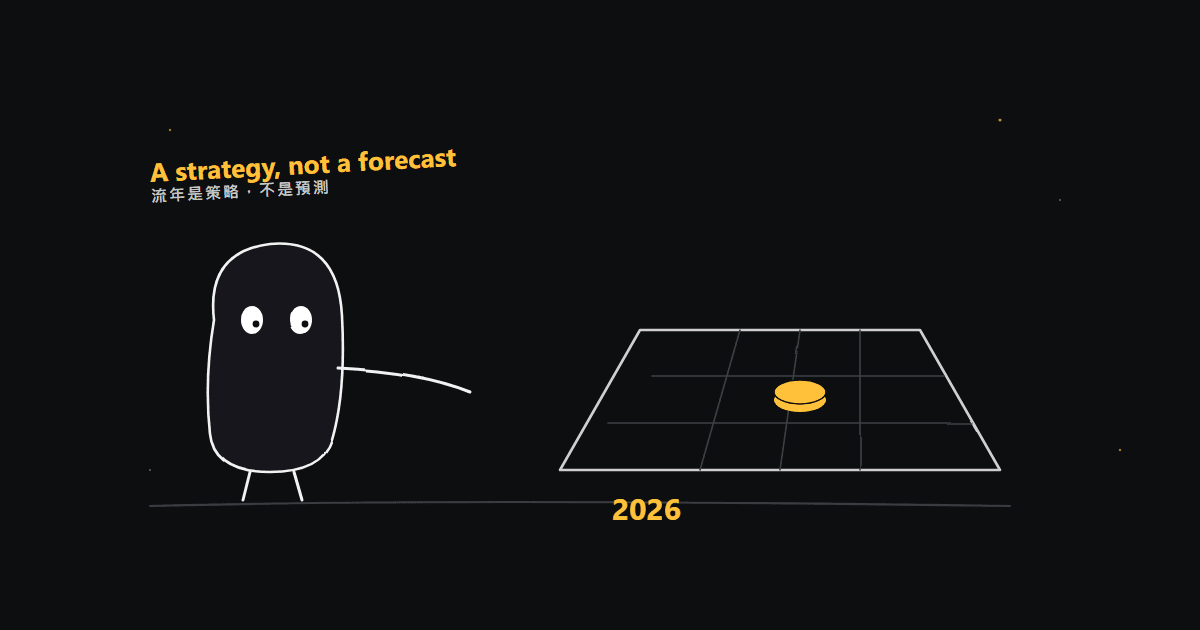
Here's what happened last week, and why I think your 2026 horoscope is misunderstood by almost everyone who asks me to read it.
My friend K dropped a message in our group chat. Hey Louis, can you check if I should change jobs this year. She'd already done a tarot reading, asked the astrology girls in another group, and pulled up her bazi. Everyone told her something different. She wanted one clear answer.
I stared at that message for a while. Not because I didn't know how to reply, but because that one sentence carried a misunderstanding I've been watching my friends make for years.
Curious about your own chart? Cast it free in 30 seconds →
Reading your fortune isn't about finding the correct answer. It's about finding the strategy that belongs to your year.
These sound similar. They are not.
K was treating her annual fortune like an exam paper, hoping a teacher would write the answers on the back. But your fortune isn't a test. It's a map. A map doesn't tell you which road you must take. It shows you where the mountains are, where the rivers are, where the bridges hold, where the mines are buried. Whether you walk into a minefield is still your call.
I've studied ziwei dou shu for over five years now. I've read more than 300 charts. The longer I do this, the more certain I become of one thing. The real value of an annual fortune isn't whether it's accurate. It's whether it makes your year a little smarter.
Back to K.
I didn't tell her yes or no. I pulled up her chart. Her 2026 命宫 (life palace) sits with 天机化权 (heavenly mechanism, activated), her 财帛宫 (wealth palace) holds 天同化禄 (heavenly companion, prosperous), and her 夫妻宫 (marriage palace) is hit by 廉贞化忌 (chastity star, obstructed). Three lines of information add up to a strategy briefing.
天机化权 told me her year is about turning ideas into action. Thinking won't win, doing will. 天同化禄 told me her money this year comes from cooperation and service, not from grinding alone. 廉贞化忌 hitting her marriage palace told me her real landmine isn't career, it's emotional decisions made under pressure.
So I didn't say change jobs or don't change jobs. I said, here's the framework for how to think about changing jobs this year. One, don't quit on impulse. Your 化权 is calling for planned change. Two, pick something with a collaborative tilt, not lone-wolf positions. Your 化禄 lands on heavenly companion, which thrives on partnership. Three, if any of this involves a personal conflict with someone at your current company, your impulse moves this year will probably end in regret, because that 化忌 turns emotional decisions into traps.
K paused for a beat. Then she said, Louis, this is completely different from what everyone else told me. They all said yes or no. You're teaching me how.
Yes, I said. That's what an annual fortune should do.
But think about it. Why does almost everyone walk into a reading hoping for a binary answer. Because people hate uncertainty. When you're at a crossroads, what you crave isn't a map. You crave someone pointing at a road and saying, this one, don't ask. That craving is so strong that any astrologer who speaks with enough confidence gets paid for life.
Real life isn't shaped like that.
Real life is uncertainty at every step. What your chart can do isn't remove uncertainty. It can show you the shape of it. Where the wind is strong, where the current is gentle, where the rocks are hiding, where the water actually carries you. See the shape clearly, and your odds improve by an order of magnitude.
I've fallen into this trap myself. When I left my old job in 2022 to start FateStar, I read my own chart for that year. My 官禄宫 (career palace) sat with 七杀 (seven killings), a star of dramatic breaking and rebuilding. I looked at that chart maybe twenty times that year. Not to find an answer. To remind myself before every impulsive decision what 七杀 had taught me. You can break, but you'd better build again afterward, or you're just breaking for the sake of breaking.
I did build. I also stepped right into the trap of 七杀. I killed a partnership that year over a non-issue, in a moment of pride. The cost was three months and a non-trivial deposit. Charts don't tell you you'll be impulsive at three on a Tuesday afternoon. Charts tell you that this year, this direction is where your impulsivity lives. Whether you can brake at three in the afternoon is practice, not prediction.
So you ask, was it accurate.
It was. But the accuracy isn't in the prediction. The accuracy is, you already saw the shape and you walked into it anyway. That's training, not failure.
When I finished explaining this, K asked another good question. What if I ask another teacher and they say something different.
Different schools of ziwei exist. San He (the school I use), Fei Xing, Zhong Zhou. They argue about transformation rules, palace relationships, all sorts of things. I won't get into that fight here. I want to talk about something else.
No matter which school, no matter which teacher, you can judge whether someone is giving you a strategy or a prophecy with one test.
A prophecy needs nothing from you. You'll get rich this year. You'll fall in love this year. No conditions, no windows, no warnings. That's not astrology. That's faith dressed up in star names.
A strategy needs your participation. You have a window in such-and-such month, but if you don't act, it closes. Watch out for impulses in this direction. That's astrology. The defining feature is that it points at decisions you still have to make.
Each year, your chart is a strategy briefing about three things.
Where your tailwind is. Some directions are simply more efficient for you this year than others. The same effort gets multiplied two or three times when aligned with your tailwind.
Where your landmines are. The 化忌 in your year is the direction where stubbornness costs you the most. Most people don't fail from laziness. They fail from grinding the wrong direction.
Where your breakout window is. Each year contains one or two narrow time periods that determine whether you graduate to the next level. Miss them and the next opportunity might be a full ten-year cycle away.
K told me she was getting nervous. She said it sounded like every year was an exam.
I said no. Don't treat it like an exam. Treat it like a map.
A map means you don't need to take the optimal route. You can take the long way. You can take the slow way. You can take the one you simply enjoy. A chart never forces you toward optimization. It only tells you what optimization would look like, in case you want it.
The ancient Greeks had two words for time. Chronos was the physical kind, seconds ticking, days passing. Kairos was the right moment, the one that opens and closes. Chronos is given to everyone. Kairos belongs only to those who can see it. Your annual chart helps you see kairos. It doesn't add more chronos to your life. It teaches you not to miss kairos.
Luck isn't something you wait for.
Luck happens when you've already located the kairos on the map and you happen to be ready when it arrives. The preparation is yours. The map is your chart's job. Miss either one and what you have isn't luck.
If you've never looked at your own ziwei chart, look at one today. Not because your fate is fixed. Because seeing the shape of your year is where every good decision starts.
Read your 2026 chart on FateStar →
FAQ
Is my 2026 horoscope a prediction of what will happen to me?
No. A useful 2026 horoscope reads more like a strategy map than a verdict. It points to where your tailwinds, landmines, and breakout windows tend to sit during the year, then leaves the decisions to you. Anyone who promises a fixed outcome with no conditions is offering a prophecy, not a reading.
What does a Chinese astrology yearly forecast actually tell me?
A Chinese astrology yearly forecast like ziwei dou shu maps the shape of your year: the directions where effort multiplies, the 化忌 areas where stubbornness costs the most, and the one or two short windows that often matter the most. It frames choices rather than removing them, so you can decide with more context.
How do I know if my fortune reading is trustworthy?
Apply one test. A trustworthy reading needs your participation — it names conditions, windows, and warnings tied to decisions you still control. A reading that simply declares you'll get rich or fall in love, with no action required, is faith dressed up in star names. Strategy invites your input; prophecy asks for none.
What the classics say
The Complete Book of Zi Wei Dou Shu (Ming dynasty) says: "A good chart matters less than a good decade; a good decade matters less than a good year." In this article's context: the annual cycle was never about predicting events - it marks timing. Even the best foundation needs the right moment to act, which is exactly why the ancients saved the annual cycle for last.
Disclaimer: This article is cultural commentary on Zi Wei Dou Shu, for self-reflection and entertainment only - not medical, legal, financial, or any professional advice.
⚠️ FateStar generates and interprets your chart based on the traditional Chinese discipline of Zi Wei Dou Shu (紫微斗数). All content is for informational and reflective purposes only.
About the Author
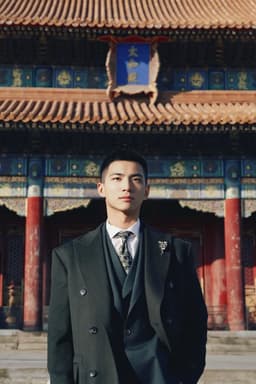
Founder of FateStar. He began structured study of San He Zi Wei Dou Shu in 2020 and is responsible for product method, source organization, and content review. Personal experience is not presented as scientific proof.
More about Louis →