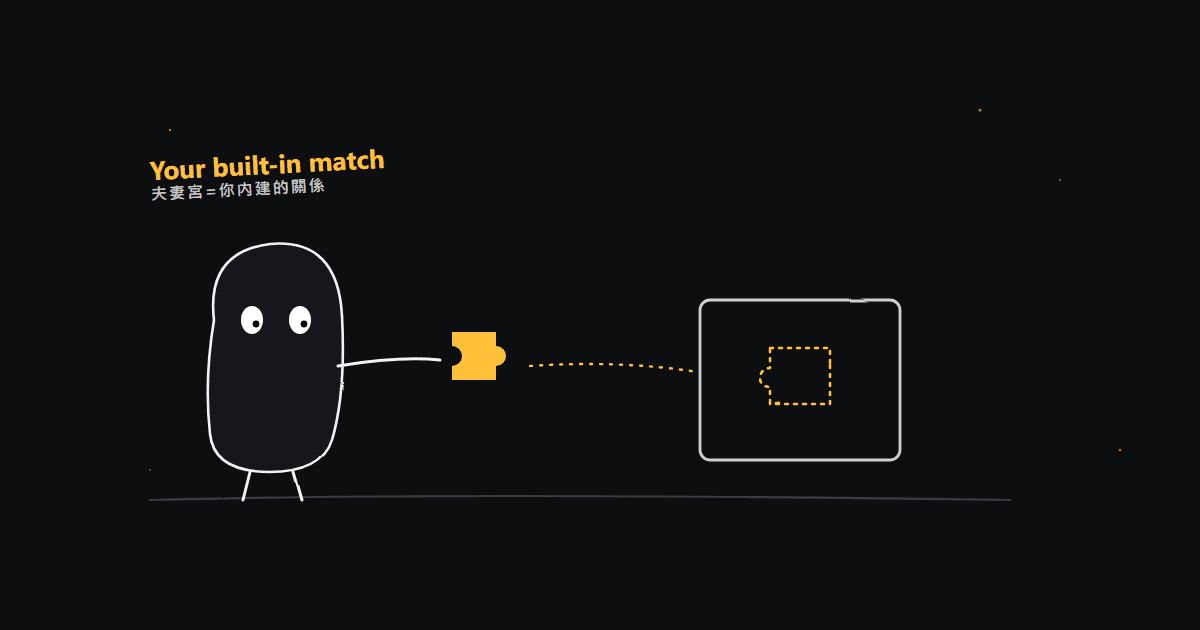
What Does Hua Ji in the Spouse Palace Mean for Your Marriage?
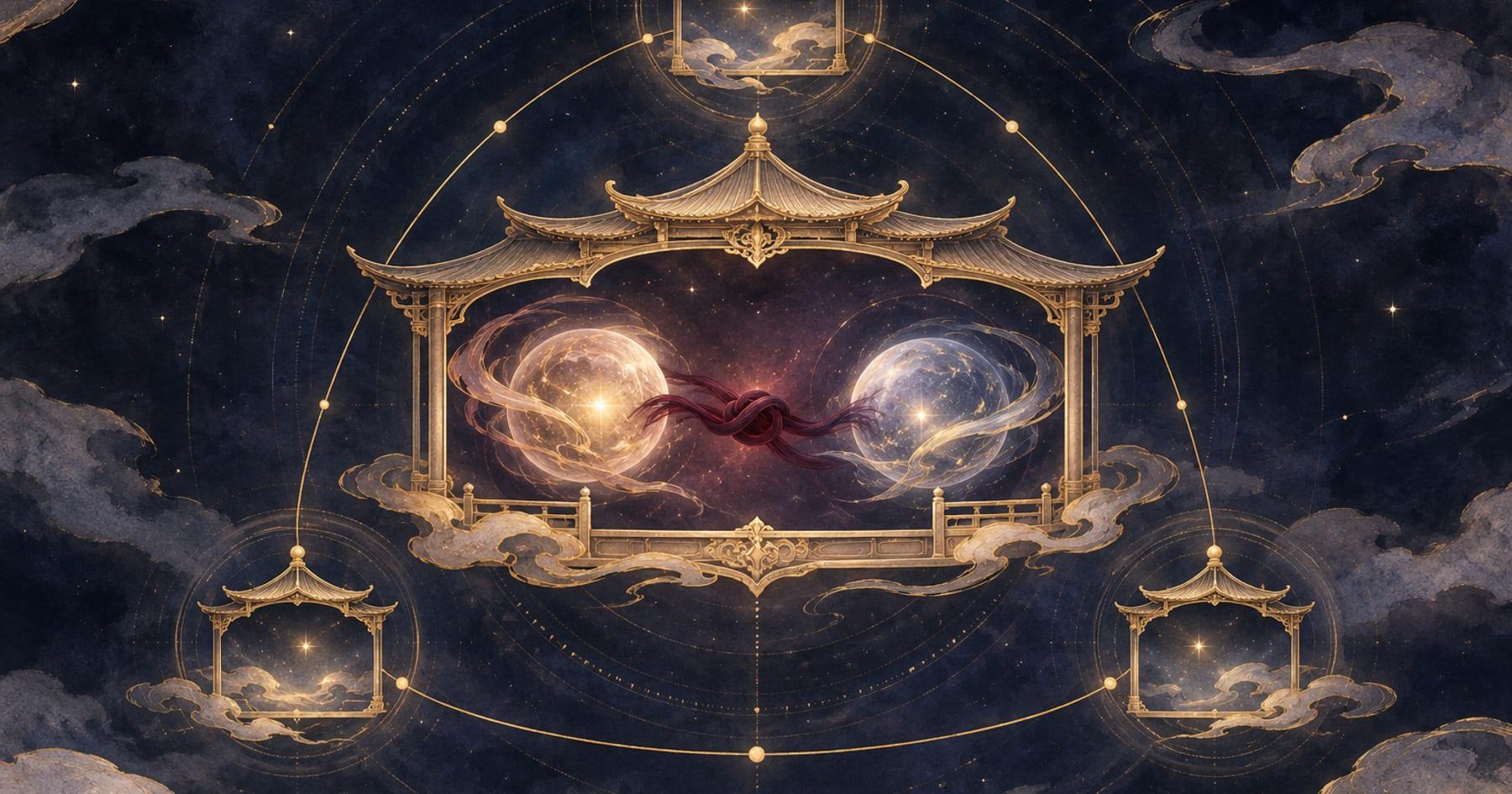
Hua Ji (化忌) in the Spouse Palace (夫妻宫) describes the thing in love you find hardest to let go of, the thing you most easily get stuck on and keep turning over. It is a life lesson, and on its own it cannot tell you whether your marriage will go smoothly. You also need to look at which star has turned Hua Ji, at the Opposite Palace (对宫), which is the Career Palace (官禄宫), and at the sanfang (三方, the palaces in trine).
First, let's be clear about what Hua Ji means. In the San He school (三合派, the "Three Harmonies" school), the Four Transformations (四化) are four kinds of change: Lu, Quan, Ke and Ji (禄、权、科、忌). Hua Ji corresponds to attachment, a sense of owing, and caring deeply. Whichever palace holds Hua Ji is where a person tends to pour the most effort. Pour in a lot, and it's easy to get stuck. Stay stuck long enough, and things start to feel like they're going wrong. That's why Hua Ji is often described as a bad thing, and people frown the moment they see it. I prefer to see it as where your attention lands. The thing that's always on your mind is usually the thing Hua Ji is pointing at. When it lands in the Spouse Palace, love and your partner weigh especially heavily on you. Carrying that weight is tiring, and it also makes you especially serious about it. If you're not yet familiar with Lu, Quan, Ke and Ji, I suggest first reading this overview of the Four Transformations to get a grounding in the basic meaning of the four changes. Once that grounding is in place, coming back to look at which palace it lands in will go much more smoothly.
With the grounding in place, the next question comes up. Which star actually turns Hua Ji? That is decided by the Heavenly Stem (天干). For the Natal chart (本命盘), you look at the birth-year Heavenly Stem. The Heavenly Stem of the year you were born decides which star turns Hua Ji. There's a trap here that a lot of people fall into. In Zi Wei Dou Shu, the year stem changes on the first day of the first lunar month, Chinese New Year. In Bazi (八字, Four Pillars), the year pillar changes at Lichun (立春, the Start of Spring). The two systems change the year at different points. If you were born between Lichun and Chinese New Year, the year stem used in Bazi and in Zi Wei Dou Shu may be different. Confirm this before you plot your chart. Get the year stem wrong, and every one of the Four Transformations in the chart goes wrong with it. There's one more thing to remember. Each Heavenly Stem corresponds to only one Hua Ji star. So a Natal chart has only one birth-year Hua Ji. Never two, and never none. It will land in one of the twelve palaces, and wherever it lands is the thing you will care about most throughout your life.
Curious about your own chart? Cast it free in 30 seconds →
So which star turns Hua Ji for each of the ten Heavenly Stems? Here's the list. This is the San He school's Four Transformations table, and everything on this site is plotted with it.
| Birth-year Heavenly Stem | Hua Ji star |
|---|---|
| Jia (甲) | Tai Yang (太阳) |
| Yi (乙) | Tai Yin (太阴) |
| Bing (丙) | Lian Zhen (廉贞) |
| Ding (丁) | Ju Men (巨门) |
| Wu (戊) | Tian Ji (天机) |
| Ji (己) | Wen Qu (文曲) |
| Geng (庚) | Tai Yin |
| Xin (辛) | Wen Chang (文昌) |
| Ren (壬) | Wu Qu (武曲) |
| Gui (癸) | Tan Lang (贪狼) |
Count them and you'll find that ten Heavenly Stems use only nine stars. Tai Yin appears twice. It turns Hua Ji once in Yi years and again in Geng years. Different schools disagree about the Four Transformations for the Geng stem. This site is fixed on the San He school, where Geng turns Tai Yin into Hua Ji. If you read other books or websites and find that Geng years don't match, first check whether it's a different school. Different schools naturally reach different conclusions, and that doesn't mean anyone plotted the chart wrong.
This table also hides something that articles about the Spouse Palace rarely mention. When you write a chart-plotting program, you have to enter the Four Transformations table one cell at a time. Once it's all in, look back over it and it becomes very clear. Zi Wei (紫微), Tian Fu (天府), Qi Sha (七杀), Po Jun (破军), Tian Tong (天同), Tian Liang (天梁) and Tian Xiang (天相): these seven main stars never appear in the Hua Ji column of the San He Four Transformations table. No Heavenly Stem turns any of them into Hua Ji. So if the main stars in your Spouse Palace are only from this group, and there's no Wen Chang or Wen Qu in the palace, Natal Hua Ji cannot land in your Spouse Palace. It doesn't matter which year you were born. A lot of people get nervous when they see articles online about Hua Ji in the Spouse Palace. In fact, if you open your own chart and glance at which stars are in your Spouse Palace, you may be able to skip the nerves altogether. Looking at it the other way, only if your Spouse Palace holds one of Tai Yang, Tai Yin, Lian Zhen, Ju Men, Tian Ji, Wu Qu, Tan Lang, Wen Chang or Wen Qu is there any chance of Natal Hua Ji. Even with that chance, your birth-year Heavenly Stem still has to match. If it doesn't, there's no Hua Ji there.
There's one exception worth mentioning on its own. Wen Chang and Wen Qu are auxiliary stars, not main stars. Wen Chang turns Hua Ji in Xin years, and Wen Qu turns Hua Ji in Ji years. So even if the main star in your Spouse Palace is one of those seven, as long as Wen Chang sits in the palace and you were born in a Xin year, or Wen Qu sits there and you were born in a Ji year, Natal Hua Ji will still land in your Spouse Palace. When reading a chart, don't look only at the main stars. Scan the auxiliary stars as well.
Let's walk through a hypothetical case. Suppose you were born in a Geng year. Check the table above: the Geng stem turns Tai Yin into Hua Ji. Next, find which palace Tai Yin sits in on your chart. If Tai Yin is in the Spouse Palace, your Natal Hua Ji is in the Spouse Palace. If Tai Yin is in the Wealth Palace (财帛宫), Hua Ji lands in the Wealth Palace, and your Spouse Palace has no birth-year Hua Ji. Someone born in a Yi year likewise looks for Tai Yin. Once you've found where the Hua Ji star is, look at the Opposite Palace and the sanfang. Only by reading these palaces together have you finished the first layer of Hua Ji in the Spouse Palace.
Now for the Spouse Palace's Opposite Palace and sanfang. The order of the twelve palaces is fixed: Life Palace (命宫), Siblings Palace (兄弟宫, xiongdi), Spouse Palace, Children Palace (子女宫, zinü), Wealth Palace, Health Palace (疾厄宫, ji'e), Travel Palace (迁移宫), Friends Palace (交友宫, jiaoyou), Career Palace, Property Palace (田宅宫, tianzhai), Fortune & Virtue Palace (福德宫), Parents Palace (父母宫, fumu). The palace six places away is the Opposite Palace, and palaces four places apart form the sanhe (三合, trine). Count by these rules and the Spouse Palace's Opposite Palace is always the Career Palace. Its sanfang is always the Travel Palace and the Fortune & Virtue Palace. Every chart works this way. This matters a lot when reading Hua Ji. Hua Ji in the Spouse Palace clashes with the Career Palace opposite it. That's why the San He school almost always reads the Career Palace alongside Hua Ji in the Spouse Palace. Career and love often get pulled at the same time. During a period of heavy work pressure, a relationship is more likely to get tense. When the relationship is stuck, it's harder to focus at work. As for the sanfang, the Fortune & Virtue Palace governs your mood and inner enjoyment, and the Travel Palace governs your outside environment and how you are when you're out in the world. The stars in these two palaces affect how you digest the Ji in the Spouse Palace. When the Fortune & Virtue Palace is steady, you can carry more emotionally. When the Travel Palace runs smoothly, outside matters are less likely to come back and weigh on your relationship.
Next, let's go star by star. Even when it's the same Hua Ji entering the Spouse Palace, different stars point the lesson in very different directions. What follows describes tendencies only, which you can compare against how you actually feel.
Tai Yang and Tai Yin, as a pair, lean towards gaps in giving and in emotion. People with Tai Yang Hua Ji tend to give a lot in a relationship. After giving, they feel the other person didn't notice, and resentment builds. People with Tai Yin Hua Ji feel things finely but say little. The gap lies in what goes unsaid, building up bit by bit.
Ju Men leans towards communication and arguments. The tone of a single sentence might lead to a fight that lasts all night. Or it might go the other way, with words bottled up inside. Bottled up long enough, they come out all at once, and the other person has no idea what's going on.
Lian Zhen and Tan Lang, as a pair, lean towards emotional investment and desire. Invest deeply, and expectations rise with it. Wanting a lot from a relationship makes it easy to be pulled back and forth between gain and loss. You love hard, and you get tired hard too.
Tian Ji leans towards overthinking and change. A small matter gets replayed in your head round after round. The rhythm of the relationship also tends to shift more: moving house, changing jobs, spending more time apart than together. Changes in arrangements like these are fairly common.
Wu Qu leans towards practicality and attitudes to money. Who pays how much, how housework is split, saving versus enjoying: very practical matters like these easily become knots between the two of you. When things are good nobody mentions them, but in a fight they all get dragged out.
Wen Chang and Wen Qu, as a pair, lean towards promises, paperwork and the details of wording. Things that were said, things that were signed, a single word in a message: any of these can get blown up. Something the other person said offhand, you remember for a long time.
These are all just tendencies. The same star can behave very differently depending on the sanfang and auxiliary stars it meets. Using them to understand yourself is fine; using them as labels is far too crude.
With the stars covered, let's look at a few claims that often get exaggerated. Three are the most common online. Hua Ji in the Spouse Palace means you're destined to divorce. Hua Ji in the Spouse Palace means you're destined to marry late. Hua Ji in the Spouse Palace means your spouse will harm you. These claims sound very specific, which is why they're so frightening. But they all skip several steps. They don't look at which star has turned Hua Ji. They don't look at what's in the Opposite Palace, the Career Palace. They don't look at the arrangement of the sanfang, the Travel Palace and the Fortune & Virtue Palace. Nor do they look at where the 10-Year Cycle (大限) and Annual Cycle (流年) have reached. Without all that, they jump straight to a conclusion. There's also a very simple point. People born on the same day in the same two-hour period (时辰, shichen) have the same Zi Wei Dou Shu Natal chart. These people are scattered all over the place, living their own lives, and it's hard to imagine their marriages following the same script.
One star cannot carry a whole marriage.
So when do you need to pay closer attention? For that, you look at three layers: Natal, 10-Year Cycle and Annual Cycle. Natal Hua Ji comes from the birth-year Heavenly Stem and stays with you for life. It's more like a long-term personality lesson, a habitual way you approach love. It doesn't suddenly appear, and it doesn't suddenly disappear. The 10-Year Cycle covers ten years. The 10-Year Cycle Hua Ji is set from the Heavenly Stem of that cycle's palace, and it governs the overall atmosphere of those ten years. Each chart's 10-Year Cycle palace stems are different, so you need to look on your own chart at which stem is written in that palace, then check the same Four Transformations table. The Annual Cycle covers only one year. The Annual Cycle Hua Ji uses that year's Heavenly Stem. 2026 is a Bing Wu (丙午) year, and the Bing stem turns Lian Zhen into Hua Ji. 2027 is a Ding Wei (丁未) year, and the Ding stem turns Ju Men into Hua Ji. Only when that year's Hua Ji star happens to land in your Spouse Palace does it make sense to talk about relationship pressure for that year. If it lands in another palace, go and read that other palace. Don't apply the word Hua Ji to your love life every time you see it. Everyone's stars sit in different positions. In the same year of Lian Zhen Hua Ji, it lands in some people's Spouse Palace and in other people's Wealth Palace. Someone else saying this year brings heavy relationship pressure doesn't mean the same goes for you.
For easy reference, here are the Annual Cycle Hua Ji stars for the next five years.
| Year | Stem-Branch (干支) | Annual Cycle Hua Ji star |
|---|---|---|
| 2026 | Bing Wu (丙午) | Lian Zhen |
| 2027 | Ding Wei (丁未) | Ju Men |
| 2028 | Wu Shen (戊申) | Tian Ji |
| 2029 | Ji You (己酉) | Wen Qu |
| 2030 | Geng Xu (庚戌) | Tai Yin |
When you use this table, remember that Zi Wei Dou Shu changes the year on the first day of the first lunar month. When the Western calendar rolls over on 1 January, the Zi Wei Dou Shu Annual Cycle hasn't changed yet. Right now the Bing Wu year isn't over; we only enter the Ding Wei year on the first day of the first lunar month next year. And don't count from Lichun either, since that's the Bazi changeover point. Mix the two systems and your Annual Cycle Hua Ji will be off by a whole year.
Going further, you'll run into die ji (叠忌, stacked Ji). If your Natal Hua Ji is already in the Spouse Palace and an Annual Cycle or 10-Year Cycle Hua Ji also moves in, the San He school sees that period as a time when your relationship lesson is amplified. Things you already cared about, you'll care about even more. Places where you already tended to get stuck, you'll get stuck more easily. This is a reminder, not something to scare yourself with. Knowing that period will be more sensitive lets you prepare ahead of time. Raise important matters when you're both calm. For topics that tend to spark arguments, first get clear about what you actually care about. When you're tired, make fewer big decisions. If you're truly stuck, talk it over with someone you both trust. Prepare well, and that period will just take more effort; you'll get through it.
If you're not married yet, or you're currently dating, seeing Hua Ji in your Spouse Palace is when panic comes most easily. At this stage, though, the Spouse Palace reflects more of your own patterns in love. How you tend to love someone, what you fear in a relationship, where you most often get stuck. The thing Hua Ji points to is the part you care about most. Getting to know it first is far more useful than guessing who your future partner will be. Understand yourself, and you'll take fewer detours in your next relationship. If you're dating and want to know what else the Spouse Palace can show, you can read this article, What the Spouse Palace Can Show While You're Dating, which goes into more detail.
If you've already reached the point of talking about marriage, a lot of people want to do hepan (合盘, chart comparison). When comparing charts, don't fixate on this one Hua Ji in your Spouse Palace. The two charts need to be read together. Where your Ji star lands, how the other person's stars receive it, how your Life Palaces and Spouse Palaces reflect on each other: these are what chart comparison is really about. Making a judgement from a single Hua Ji is like reading only half the page. If you want to know what to watch for when comparing charts before marriage, see this article, Should You Compare Charts Before Marriage?.
At this point, a word about myself. I began studying Zi Wei Dou Shu under a teacher in Taiwan in 2020, and this year is my sixth year. My original reason for learning it was to debunk it. Instead I was proven wrong, and I kept on studying. Over these years I've read more than 300 charts for people for free. Later I wrote the whole chart-plotting logic into a program, which is the FateStar website. One advantage of writing a program is that there's nowhere to be vague. Where every star goes and where every Hua Ji comes from all have to be written as explicit rules. Which palace Hua Ji lands in is decided by the Heavenly Stem and the positions of the stars. These rules are all laid out on the chart it produces, and you can check them yourself step by step. You don't have to rely on anyone's word, and you don't have to be frightened by anyone's word either.
If you want to know whether your Spouse Palace has Hua Ji, go to the free chart and plot your own chart. First find your birth-year Heavenly Stem, remembering that the year changes on the first day of the first lunar month. Check it against the table above to find your Hua Ji star. Then see which palace that star lands in. Finally, look at which stars sit in your Spouse Palace and your Career Palace.
⚠️ FateStar generates and interprets your chart based on the traditional Chinese discipline of Zi Wei Dou Shu (紫微斗数). All content is for informational and reflective purposes only.
About the Author

Founder of FateStar. He began structured study of San He Zi Wei Dou Shu in 2020 and is responsible for product method, source organization, and content review. Personal experience is not presented as scientific proof.
More about Louis →Related Articles

What Does Tian Ji in the Career Palace Mean for Your Job?
What Is San Fang Si Zheng in Zi Wei Dou Shu? The Four Linked Palaces
Can You Read a Zi Wei Dou Shu Chart Without Your Birth Time?
The Anxious Woman's Ziwei Self-Rescue — What Your Health and Happiness Palaces Reveal About Your Insomnia, Binge Eating, and Random Meltdowns

What Does Qi Sha in the Travel Palace Mean in Zi Wei Dou Shu?