Is My Fate Doomed? The Truth About Hua Ji (化忌) — What 100 Charts Taught Me
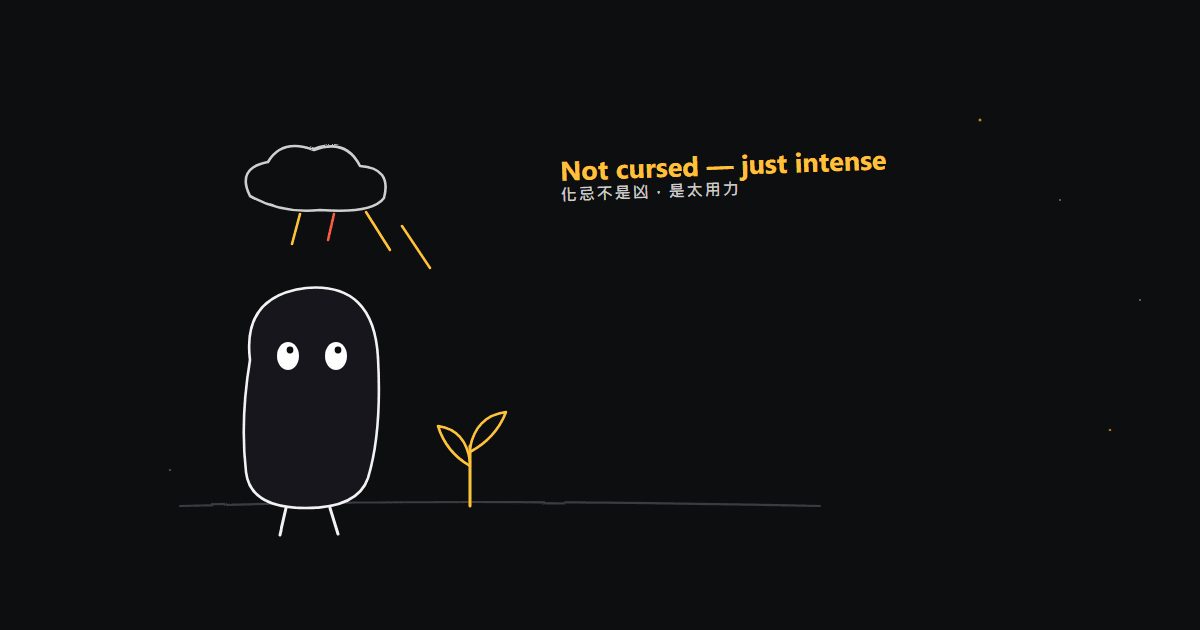
Here's how it went.
Last month my friend Wendy came over to look at her 2026 chart. I'd barely finished telling her that her Wealth Palace was sitting on a Hua Ji when her face changed — and the question she asked next is the one almost everyone secretly wants answered: "is my life good, or am I destined to struggle?" She gripped her phone, dragged her free hand back and forth across the table, and without looking up at me asked just one thing:
"Louis, tell me the truth — is my fate just bad?"
She wasn't asking me "what does Hua Ji do." She was asking the heaviest question of her life —
Do I deserve a good life?
I only realized later that Wendy's reaction wasn't unusual. Of the 100 Hua Ji charts I've read, 90% of people react this same way the first time — they don't ask about good or bad fortune. They ask whether they qualify for one.
And that question, in my experience, is the single most expensive misread in the entire Zi Wei tradition. Because the moment a person decides their chart says "you don't qualify," they stop using the chart as a tool and start treating it as a sentence. They quit the field. They lower their ceiling. They watch a string of opportunities walk past and tell themselves it was just "my chart." Hua Ji didn't cause the loss. The misread did.
This whole piece is the long version of what I told Wendy that night. If you've ever stared at your own chart and quietly wondered the same thing, this is for you.
A Concept Misread By the Whole Industry
Go skim any beginner post on Zi Wei Dou Shu (Purple Star Astrology) and Hua Ji shows up as "the most malefic of the Four Transformations — avoid at all costs." Short-video creators see a few Hua Ji in your chart and sigh, "oof, your life's gonna be hard." Fortune-telling apps run scoring algorithms and downgrade your chart to "second tier" the moment a Hua Ji lands in the wrong palace.
Pile that up and you turn a fact into a curse —
You receive a chart with Hua Ji = you're told this life will be harder than other people's.
Let me say something harsh.
This is one of the biggest Zi Wei misreads of the 21st century.
Five years of charting have made me more and more sure of one thing: Hua Ji does not decide whether your life is good. Hua Ji decides what gets amplified. What your life looks like after the amplification — that's about how you relate to the energy, and has nothing to do with "malefic vs. auspicious."
This sounds counterintuitive. Let me unpack what Hua Ji actually is.
A quick aside on where the misread comes from, because if you understand the source you'll stop being intimidated by it. Most modern English-language descriptions of Hua Ji are downstream of one-line summaries written for almanacs or commercial fortune-telling decks — formats where every star has to fit into either "good" or "bad" because the buyer wants a quick verdict. Classical Zi Wei never worked that way. The Song-dynasty texts treat Hua Ji as a directional vector, not a moral label. Somewhere between the original sources and your phone's astrology app, the nuance got crushed into a thumbs-down emoji.
That compression is the reason your gut tightens when you see Hua Ji in your chart. It's not because the star is actually scary. It's because the version of the star you were taught is a marketing artifact.
Hua Ji Isn't "Misfortune" — It's "Focus"
In Zi Wei Dou Shu (Purple Star Astrology), the Four Transformations (Si Hua) — Hua Lu, Hua Quan, Hua Ke, Hua Ji — are four kinds of energetic modifications triggered by the Heavenly Stems.
The Four Transformations Compared
| Transformation | Core Energy | Used Right | Used Wrong |
|---|---|---|---|
| Hua Lu (transformation of fortune) | Increases income, network, flow | Snowballing resources | Easy come, easy go |
| Hua Quan (transformation of power) | Increases control, decisiveness, leadership | Real authority | Domineering, abrasive |
| Hua Ke (transformation of reputation) | Increases prestige, fame, structure | Lasting reputation | Hollow fame, exhausting |
| Hua Ji (transformation of obstacle) | Increases focus, attachment, caring | Deep specialization | Going down a rabbit hole |
Notice what I wrote — not "diminishment," not "destruction" — "increased focus."
The Literal Meaning vs. The Energy Layer
The core of Hua Ji is "energy over-focused on that palace." The character 忌 literally means taboo, forbidden, something that gets stuck. But at the energetic layer, Hua Ji is the magnifying glass life hands you — pointed at one specific palace.
Wealth Palace with Hua Ji ≠ you will lose money. Wealth Palace with Hua Ji = your attention to money is abnormally high.
You care about money more than the average person. You're willing to invest more of yourself in it. You're more sensitive to gains and losses around it.
That "focus," pointed in the right direction → wealth. Pointed wrong → ruin.
Hua Ji isn't a verdict from fate. Hua Ji is the magnifying glass fate handed you.
Think about what a magnifying glass actually does. It doesn't create heat — it concentrates sunlight that was already there. Point it at dry grass and you'll start a fire. Point it at a piece of paper to read fine print and you'll see something you couldn't see before. Same lens. Different outcomes, entirely determined by where you aim it. That's Hua Ji. The energy of the palace was already in your life; the transformation just turned the dial up.
This is also why I push back hard whenever a client tells me "my chart has Hua Ji so I shouldn't try X." Avoiding the palace doesn't shrink the energy — it just leaves it unattended. The magnifying glass keeps focusing whether or not you're looking. The only real question is whether you direct it intentionally or let it burn whatever happens to be in front of it.
San He vs Fei Xing — Why Geng Hua Ji = Tai Yin
Before moving on I have to flag a schools-of-thought issue. Different lineages disagree about which star Geng-stem Hua Ji lands on, and this directly affects how you read your chart.
Geng Stem Hua Ji: San He vs Fei Xing
| School | Geng Hua Ji | Historical Standing | FateStar Uses |
|---|---|---|---|
| San He school (widest transmission, Song dynasty) | Tai Yin (Moon) | Transmitted for ~1000 years, strong classical basis | Locked in |
| Fei Xing school (modern Taiwanese branch) | Tian Tong | Modern branch, developed in the 20th century | Not used |
FateStar's engine is strictly locked to the San He school; Geng-stem Hua Ji goes to Tai Yin (Moon).
Why Tai Yin
Why? Because Tai Yin governs softness, receiving, and the inward turn. Hua Ji = Tai Yin's "holding things in, mulling things over" gets amplified. That psychological portrait matches actual chart cases far better than the alternative.
If the chart you've read before was a Fei Xing version, your "Hua Ji position" might differ from what you'll see in a San He reading. Don't panic — that's a lineage difference. But for empirical accuracy, San He has a thousand years of transmission and holds up under verification.
A bit more context on why this matters. The Fei Xing branch is fascinating in its own right — it specializes in palace-to-palace flying transformations and produces some elegant analytical moves. But on the specific question of which star Geng Hua Ji belongs to, the San He attribution to Tai Yin is the older reading, the better documented one, and the one that holds up across the largest body of real-world cases. When I started charting I tested both. Within the first 30 charts the San He assignment was producing observably more accurate readings of how the client actually behaved, especially in emotional and financial palaces. That convergence with real life is the test I trust above any textual argument.
If you've been reading your own chart on an app and felt that the "Hua Ji description" never quite fit you — there's a real chance you were getting the wrong assignment. Worth re-running on a San He engine before you decide your chart is broken or your life is.
I wrote a whole piece on the translation gap and lineage splits →
3 Hua Ji Patterns From 100 Charts
I tallied where Hua Ji landed across those 100 charts. It clusters into three families of palaces:
| Hua Ji Location | Share | What the Magnifying Glass Aims At |
|---|---|---|
| Wealth Palace / Career Palace | ~30% | Career + money |
| Spouse Palace / Children Palace | ~25% | Intimate relationships |
| Self Palace / Wellbeing Palace | ~15% | Self-perception |
| Other palaces | ~30% | Parents / siblings / property / travel etc. |
Let's go one by one.
Pattern One: Wealth / Career Hua Ji → "The Career Magnifier"
This is the most common Hua Ji location. About 30% of those 100 charts.
Typical behavior: these people care about money and career far more than average. They recalculate their finances over and over, refresh their stock app constantly, keep asking whether their current job is the right one, and compare their pay to peers all the time.
Used Right vs. Used Wrong
| Dimension | Used Right: Deep Specialization | Used Wrong: Lateral Comparison |
|---|---|---|
| Behavior | Stays in one field for 10 years, goes deeper every year | Sees others earn more, jumps; switches industries constantly |
| Outcome | Top-tier expert or wealthy operator | Broke, exhausted, never satisfied |
| Example | Wealth Palace with Wu Qu Hua Ji, medical device sales for 12 years, 8-figure annual income | Lives paycheck to paycheck, switches jobs every 6 months |
| Felt sense | Tired but fulfilled | Tired and empty |
I once read a chart with Wu Qu (Martial Music) Hua Ji in the Wealth Palace. The client, Michael, has been in medical-device sales for 12 years and now pulls 8 figures a year. Wu Qu Hua Ji makes him obsess over the smallest detail of every deal. Most people couldn't stand that level of nitpicking, but his clients buy it.
What Michael's chart shows clearly — and what most career-Hua-Ji people get wrong — is that the magnifying glass doesn't ask you to be smarter than your competitors. It asks you to be more thoroughly invested in one specific thing than they are. Twelve years in the same niche, the same equipment category, the same kind of hospital procurement cycle. That's not exciting on paper. It's how Hua Ji actually compounds. The same energy that destroys job-hoppers becomes a moat for someone who stays.
If you have Wealth or Career Hua Ji and you're reading this in a state of "should I quit and try something else?" — pause. The question your chart wants you to answer isn't "is there something better out there." It's "have I gone deep enough in what's already in front of me." Hua Ji rewards the second question and punishes the first.
I wrote a dedicated piece on the 14 Main Stars wealth framework →
Pattern Two: Spouse / Children Hua Ji → "The Relationship Magnifier"
Second most common. Roughly 25% of charts.
Typical behavior: these people care about intimate relationships far more than average. Spouse sends a sticker and doesn't reply for 5 minutes? They will write three novels in their head about what it means. Their kid scores a 90? They don't think "not bad," they think "that's 10 points short."
Used Right vs. Used Wrong
| Dimension | Used Right: Emotional Depth | Used Wrong: Controlling |
|---|---|---|
| Behavior | Genuinely knows what the other person needs and when | Demands the other person report every detail |
| Outcome | Deep, lasting intimacy | Drives the other person away, exhausts self too |
| Example | Spouse Palace with Lian Zhen Hua Ji, 15-year marriage, handwrites a letter every week | Spirals into a three-novel narrative over a 5-minute non-reply |
| Felt sense | Loved deeply and loving deeply | Anxiety and suspicion |
I read one chart with Lian Zhen (Chastity) Hua Ji in the Spouse Palace. The client, Sarah, has been married for 15 years and still writes her husband a handwritten letter every week. Lian Zhen Hua Ji made her hypersensitive to the textures of the relationship. Pair that sensitivity with her high EQ and it became a superpower for keeping the bond alive.
The key thing I want you to notice about Sarah is that her sensitivity didn't decrease over fifteen years. The Hua Ji didn't fade. What changed was the channel she ran it through. Early in the relationship she said the same hypersensitivity used to manifest as checking her husband's phone and rereading old text exchanges for tone. Same energy. Different output. She didn't "heal" her Hua Ji. She gave it a job it could do well — writing a letter once a week as a structured act of attention. The compulsion to monitor decreased not because she suppressed it, but because she gave it somewhere else to go.
If your Hua Ji sits in a relationship palace and you recognize yourself in the controlling column above, that's the lever. The energy is going to demand expression. Pick a constructive channel before the destructive one picks you.
I wrote a dedicated piece on what the Spouse Palace really tells you about your partner →
Pattern Three: Self / Wellbeing Hua Ji → "The Self Magnifier"
The rarest but deepest pattern. About 15% of charts.
Typical behavior: these people care about themselves more than anyone else does. They reflect on themselves obsessively, doubt themselves obsessively, redefine themselves obsessively. "Who am I really?" isn't a philosophical question for them — it's daily life.
This is the pattern I see most often misdiagnosed as "clinical depression" or "low self-esteem." Sometimes both are present, but the underlying engine is different. A Self or Wellbeing Hua Ji isn't fundamentally low energy — it's high energy turned inward without a constructive outlet. Treat the symptoms and the magnifying glass keeps focusing. Give the energy a project (a journal, a thesis, a creative practice, a long-form study habit) and the same person who was looping in self-doubt suddenly produces the kind of work that requires sustained interior attention. The energy didn't need to be reduced. It needed a container.
Used Right vs. Used Wrong
| Dimension | Used Right: Genuine Self-Knowledge | Used Wrong: Self-Doubt |
|---|---|---|
| Behavior | Journaling, therapy, deep reading | "Maybe I'm not good enough, everyone else is better" |
| Outcome | Psychologists, artists, philosophers, deep thinkers | Anxiety, depression, self-negation |
| Felt sense | Thinking clarifies | Thinking spirals |
I wrote a dedicated piece on anxious-pattern women using Zi Wei to recover →
How to Actually Use Hua Ji — 3 Steps
By now I think you can feel what "Hua Ji is a magnifying glass" really means. So — when you receive a chart with Hua Ji, here's what to actually do, in three steps:
Step One: Locate
Find which palace Hua Ji sits in. That palace is where your life's (or this year's) energy is most concentrated.
Don't "avoid it" — acknowledge it.
Step Two: Diagnose
Ask yourself — right now, am I aiming that attention toward "deep specialization," or toward "comparing / controlling / doubting"?
Your answer to this question decides whether Hua Ji is your tailwind or your headwind.
Step Three: Redirect
If it's the latter, redirect. Not by escaping Hua Ji — by pointing its focus toward something constructive.
The 3-Step Quick Reference
| Step | Ask Yourself | Then Do |
|---|---|---|
| Locate | Which palace is my Hua Ji in? | Acknowledge that palace is your energetic focal point |
| Diagnose | Am I currently using Hua Ji for depth or for comparison? | Answer honestly; don't lie to yourself |
| Redirect | Can I aim this energy at depth instead? | Set a 90-day micro-goal |
Hua Ji isn't telling you to run. Hua Ji is fate pointing at you and saying: you're naturally sensitive, attached, and emotionally invested in this thing. You can use that energy to build a tower or to dig a pit. Pick.
A practical note on the 90-day micro-goal in the redirect step. The reason I keep using a 90-day window is that Hua Ji's pull is strong enough that single-week resolutions tend to evaporate, but the energy is also too restless to commit to vague multi-year intentions. Ninety days is the sweet spot where the obsession actually wants to engage. Pick something concrete enough that you'll know on day 91 whether you did it. "I will study Tai Yin's classical interpretations for an hour every weekday" beats "I will become more spiritual." Hua Ji loves specificity. Vague goals starve it; specific goals feed it.
Back to Wendy: How She Turned Hua Ji Into a Lever
Back to Wendy. After I walked her through everything above she went quiet for a long while. Then she said one sentence I still remember:
"Louis, I get it. My fate isn't bad — I've just been using Hua Ji's energy in the wrong place."
For two years she'd been comparing her salary to her former coworkers' until she couldn't sleep. She thought she was "greedy / a loser / stuck in this life forever." Now she could see — that wasn't a verdict from her chart. That was the side effect of her Wealth Palace Hua Ji pointed in the wrong direction.
Wendy's Redirect
Wendy actually opened her own sales studio that September. I checked in last week and she said she still can't help recalculating money compulsively, but — and she laughed when she said this —
"But now I'm calculating how much other people pay me, not how much more they earn than me."
Her chart didn't change. Her Hua Ji didn't change.
What changed was how she read it.
I wrote a dedicated piece on the counterintuitive lessons from 100 charts →
So, Are People With Hua Ji Doomed?
Let me just give you the answer:
Whether your fate is good ≠ how many Hua Ji you have. Whether your fate is good = how you handle your Hua Ji.
Hua Ji Quantity × Usage = Your Fate
| Hua Ji Count | Used Right | Used Wrong |
|---|---|---|
| Many (3+ Hua Ji) | Major wealth or major achievement | Living in hell across self, money, and career |
| Medium (2 Hua Ji) | Deep specialization, first place | Both fronts stuck in rabbit holes |
| Few (1 Hua Ji) | Single-point breakthrough | 30 years trapped in that one palace's loop |
| None (theoretically rare) | Scattered inspiration, mostly average | No focus, no breakthrough |
Many Hua Ji used right → major wealth or major achievement. The most intense chart I've ever read had Hua Ji in Self, Wealth, and Career simultaneously (in the San He calculation). That person is now worth 9 figures. Why? Because their attention to making money, knowing themselves, and building their career all got amplified to the maximum — and they pointed every bit of it in the right direction.
Few Hua Ji used wrong → a lifetime of struggle anyway. I've also met people with just one Hua Ji who spent 30 years caught in the negative loop of that single palace. Stuck in a closed cycle they couldn't even see.
The quiet reason "few Hua Ji" isn't automatically the safer chart is that a single concentrated focal point is easy to ignore until it's too late. Three Hua Ji forces a person to confront the pattern early — you cannot avoid being shaped by something pointed at you three times. One Hua Ji can hide for decades. By the time you notice you've been running the same loop on the same palace since your twenties, you've already paid the compounding cost. This is why I don't congratulate clients on "clean" charts and don't apologize for "heavy" ones. The chart isn't the cost. The blind spot is.
Next Time Someone Says "Wow, You Have So Many Hua Ji"
Next time someone shakes their head at you and says "wow, you have a lot of Hua Ji in your chart" — don't flinch. Tell them:
"Oh yeah? Then I guess I take that thing seriously."
Your Next Step
If you want to know which palace your Hua Ji sits in — FateStar's free chart already has the San He Geng-stem Hua Ji (Tai Yin) locked in per the classical sources. Enter your birth date and time, and in 30 seconds you'll get a full chart with the Four Transformations marked.
But more importantly — knowing where your Hua Ji is is only Step One. What actually changes your fate is Step Two: whether you're willing to admit that energy lives in you, and then point it toward the right thing.
👉 Try your free chart on FateStar →
If you want to keep reading, these are worth your time:
- 📖 The 14 Main Stars Wealth Framework — where your money lives this year
- 📖 The annual cycle isn't a prediction, it's your year-long strategy map
- 📖 I read 100 charts and found 5 counterintuitive things
- 📖 Zi Wei for anxious women — the right way to use Hua Ji
- 📖 What gets lost when Si Hua becomes "Four Transformations"
External reference:
FAQ
Is my life good if my chart has a lot of Hua Ji?
The number of Hua Ji doesn't decide whether your life is good — how you aim that energy does. Hua Ji marks where your attention concentrates, not a sentence handed down by fate. Across 100 charts, people with three Hua Ji used well outperformed people with one used badly. The lever is direction, not count.
Am I destined to struggle because of Hua Ji?
No reading destines you to struggle. Hua Ji tends to amplify whatever palace it sits in, so struggle usually shows up when that intense focus points at comparison, control, or self-doubt. Redirected toward depth and specialization, the same energy often becomes a person's biggest strength. The pattern is changeable, not fixed.
What is the simplest hua ji meaning in Chinese astrology?
In Zi Wei Dou Shu, Hua Ji is one of the Four Transformations, often labelled the "obstacle" transformation. A clearer way to read it: it is over-focus, a magnifying glass pointed at one palace. It intensifies caring and attachment there. Whether that helps or hurts depends entirely on where you choose to aim it.
This article reflects metaphysical research and personal observation based on the author's five-plus years of Zi Wei Dou Shu study and over three hundred chart consultations. Nothing herein constitutes medical, legal, financial, or any professional advice. The value of a divinatory system lies in supporting self-understanding; the final choice always belongs to you.
What the classics say
The Complete Book of Zi Wei Dou Shu (Ming dynasty) says: "When Lu meets a clash, fortune hides misfortune." In this article's context: the classics warn that even Hua Lu can sour - read in reverse, Hua Ji was never pure doom either. Fortune and misfortune are always conditional in Zi Wei. Ji marks coursework, not a sentence; 100 charts confirmed it every time.
⚠️ FateStar generates a chart based on the traditional Chinese system of Zi Wei Dou Shu (Purple Star Astrology) for analytical interpretation. Content is for reference only.
⚠️ FateStar generates and interprets your chart based on the traditional Chinese discipline of Zi Wei Dou Shu (紫微斗数). All content is for informational and reflective purposes only.
About the Author
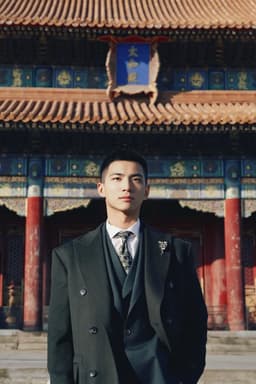
Founder of FateStar. He began structured study of San He Zi Wei Dou Shu in 2020 and is responsible for product method, source organization, and content review. Personal experience is not presented as scientific proof.
More about Louis →