Your Relationship With Your Mother Is Written In Your Ziwei Parents Palace — How To Stop Repeating Her Life
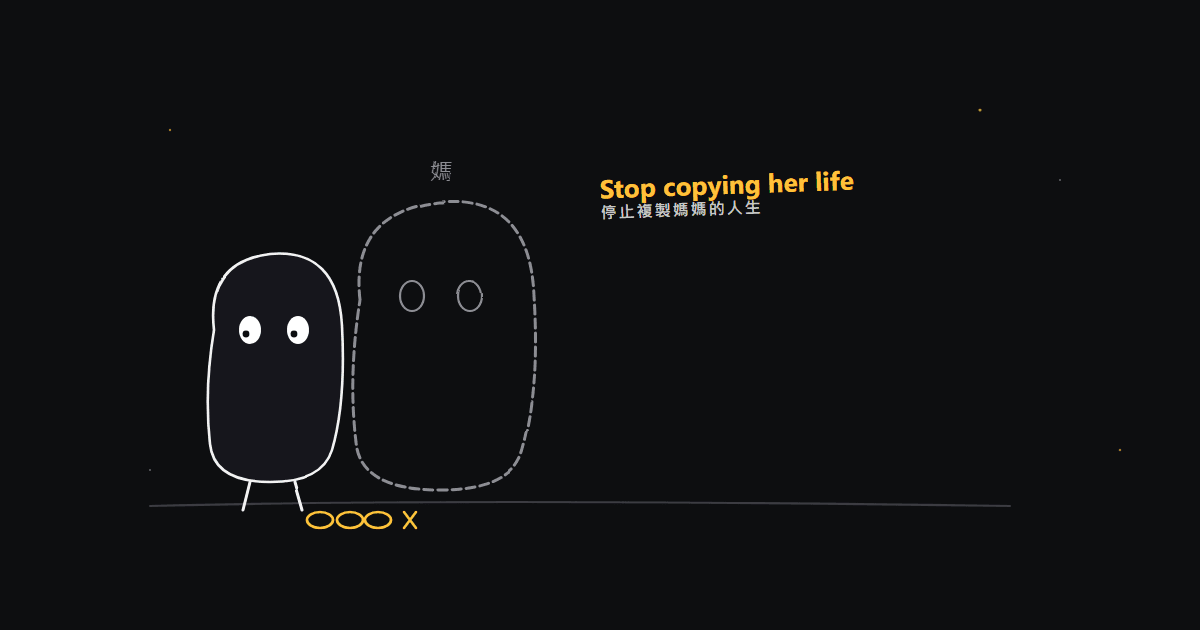
My friend S said something at 35 that I haven't forgotten. It cuts to the heart of how your relationship with your mother quietly shapes your adult life — exactly what the parents palace in Chinese astrology is built to reveal.
"I swore I'd never become my mother. Then I yelled at my five-year-old son. The exact words my mother yelled at me thirty years ago came out of my mouth."
Long silence. Then, "Louis, can ziwei explain this."
Curious about your own chart? Cast it free in 30 seconds →
I pulled her chart. Parents palace, Ju Men Hua Ji. Property palace, Lian Zhen. Textbook says "heavy family-of-origin issues." Useless to her. What I actually told her: "You aren't 'becoming your mom.' You inherited a stress-response template. In front of your five-year-old, you used the only template you've ever known. This isn't genetics. It's a behavioral pattern."
She went quiet. Then, "is there a way out."
"Yes. But first you have to see what you inherited."
That's what this article is about. Ziwei parents palace isn't about whether your parents are good or bad. It's about what pattern you inherited. If you don't see the pattern, you unconsciously re-perform it. See it, and you have a chance to break it.
Why you repeat your mother more easily than you imagine
Fact: humans build relationship templates 90% from observing parents during ages 0-7. Not what parents said to you. What you watched them do. How they handled stress. How they fought. How they reconciled. How they were silent. What your eyes saw, 100x more powerful than what they tried to teach you.
That's why "my mom yelling at me hurt so much" and then you yell at your kid. You aren't holding a grudge. Your brain has no "don't yell" template. You only learned "yell or don't yell," and the active option you've practiced is "yell."
Ziwei parents palace gives you a structured way to see this template. Once seen, you can hunt for new templates.
Parents palace main stars and what you inherited
Ziwei — Your mother is opinionated, makes decisions for you. You inherited "I'm the center, others must adapt." Brought into marriage, this suffocates partners.
Tian Ji — Your mother is "always worrying + always analyzing." You inherited "I can't relax or something bad will happen." Brought into your life, over-planning, can't enjoy the present.
Tai Yang — Your mother is high-energy but quick to anger. You inherited "emotions should be external." Brought into relationships, you yell when stressed, can't cool down.
Wu Qu — Your mother is "practical, not warm." You inherited "love is action, not words." Partners feel "you do everything for me but you never hold me."
Tian Tong — Your mother is "kind, avoids conflict." Underneath is avoidance. You inherited "endure." Brought into work and marriage, you tolerate till collapse, then explode.
Lian Zhen — Your mother has emotional swings. You learned to scan her mood. You inherited "hyper-attune to others' emotions." Brought into any relationship, you internalize for a day over their facial expression.
Tian Fu — Your mother hoards things, won't let go. You inherited "insecurity, must keep." Brought into life: old objects, old relationships, old selves — you can't update.
Tai Yin — Your mother is delicate but reserved, doesn't say love. You inherited "love is to be guessed." Brought into relationships, you expect partners to "just know what I want" and feel let down.
Tan Lang — Your mother is charismatic but appetitive. You inherited "what I want, I must have." Brought into work and romance, over-grasping.
Ju Men (S's case) — Your mother points out your mistakes, rarely praises. You inherited "I'm never enough, I must find what they did wrong to feel safe." Brought into all relationships, you criticize partners and children, then regret it.
Tian Xiang — Your mother handles everything for the family. You inherited "I must hold it all up." Brought into work and home, you take on too much and burn out.
Tian Liang — Your mother is "elder-like," all-encompassing love. You inherited "I must protect others, not be protected." Brought into relationships, you parent your partner.
Qi Sha — Your mother is fierce, makes quick hard decisions. You inherited "if unhappy, leave." Brought into relationships, you cut ties impulsively.
Po Jun — Your mother is unpredictable. You experienced family disruption young (move, divorce, major change). You inherited "stability isn't trustable, always be ready to leave." Brought into marriage, you sabotage stability.
Stopping the loop (the three steps S used)
Step 1: see the template without judgment. You aren't "unfilial." You aren't "uncultured." You inherited a template. Templates aren't your fault. Once seen, you have energy to move to step 2.
Step 2: pause 60 seconds at the moment of impulse. How your mom responded at this age, you don't have to copy. Sixty seconds gives your brain a chance to find another template. If it can't find one this time, fine — at least you didn't use the old one. Year by year, your brain stores "alternatives."
Step 3: do reconciliation work with your mother, without waiting for her apology. Your mother's template came from her mother. She's also a survivor. Don't wait for her to change. You can do the work with your "inner child" yourself. Psychology calls this inner-child work. In ziwei terms, it's a complete reading of your parents palace. Not easy. But after, your resentment toward her drops by 70%.
S is 38 now. She still occasionally yells at her son. But now after she yells, she crouches down and says, "Mom just used the way I was yelled at when I was little. I was wrong. Please forgive me." Her mother never once did this. S does. Her son's childhood will not inherit the same template.
That's the real gift of the parents palace. Not seeing if your mother was right or wrong. Seeing that you can change.
See your parents and property palaces on FateStar →
FAQ
Why do I keep repeating my mother even though I swore I never would?
Because the relationship with your mother gave you a stress-response template before age seven, long before you could choose. You didn't inherit her words — you absorbed how she handled pressure. Under stress your brain reaches for the only pattern it practiced. Seeing the parents palace pattern is the first step to storing a new one.
What does the parents palace in Chinese astrology actually show?
The parents palace isn't a verdict on whether your parents were good or bad. It maps the generational pattern you likely absorbed from them — how love, conflict, and security were modeled at home. Read as a window rather than a sentence, it tends to make an invisible family pattern visible, so you can work with it consciously.
Can I improve my relationship with my mother through ziwei?
Ziwei can't change her, but it can change what you do next. Once you name the inherited template, you can pause at the moment of impulse and choose differently, and approach reconciliation without waiting for an apology. Many people find resentment eases once the pattern stops feeling like personal fault and starts looking like something learned.
What the classics say
The Complete Book of Zi Wei Dou Shu (Ming dynasty) says: "The Parents palace reveals the fortune between you and your parents." In this article's context: the classics dedicated an entire palace to your parent relationship - early recognition that family of origin is a fixed input of the chart. Seeing the structure is step one of not repeating it.
Disclaimer: This article is cultural commentary on Zi Wei Dou Shu, for self-reflection and entertainment only - not medical, legal, financial, or any professional advice.
⚠️ FateStar generates and interprets your chart based on the traditional Chinese discipline of Zi Wei Dou Shu (紫微斗数). All content is for informational and reflective purposes only.
About the Author

Founder of FateStar. He began structured study of San He Zi Wei Dou Shu in 2020 and is responsible for product method, source organization, and content review. Personal experience is not presented as scientific proof.
More about Louis →